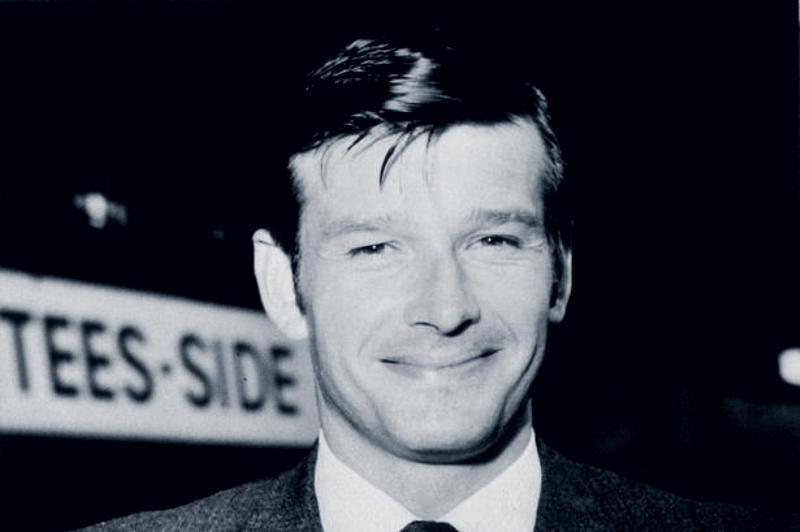

Doug’s Diaries: Craig Johnston

Original Fat Bob has again met up with award winning columnist, broadcaster and journalist Doug Weatherall, as they delve once more into his diaries to reveal previously untold facts and intimate stories that bring back to life what it was like to meet footballing heroes and be part of the footballing community. This Diary posted on our blog, is a view on the life and career of Craig Johnston

When discussing with Doug whom we should feature for the diary extract for our Diasboro article, the name Craig Johnston came to the fore. Doug still calls him “a mate”. The story enshrined in Boro folklore is, that whilst Craig was trying to get into the first team, he started playing “keepy up” with a football in front of the great Bobby Murdoch who was his coach. Bobby threw him a tennis ball and said. “when you can do that with a tennis ball then I’ll consider it.” Craig then practised and demonstrated his skill to Bobby, who true to his word played Craig in the Boro first team.

I met Craig Johnston, who was affectionately called ‘Roo’ (as in Kanga-roo) by his team-mates, shortly after he came to the Boro as a fit tanned youth. He found himself in a strange country, with people who spoke a different dialect of the English Language to what he was accustomed and the weather was always freezing. I refereed him whilst he was an apprentice, as part of the three-man team who used to do all the Boro junior games for Harold Shepherdson. Craig’s contemporaries at that time included Mark Proctor and David Hodgson, whom I still see to this day.
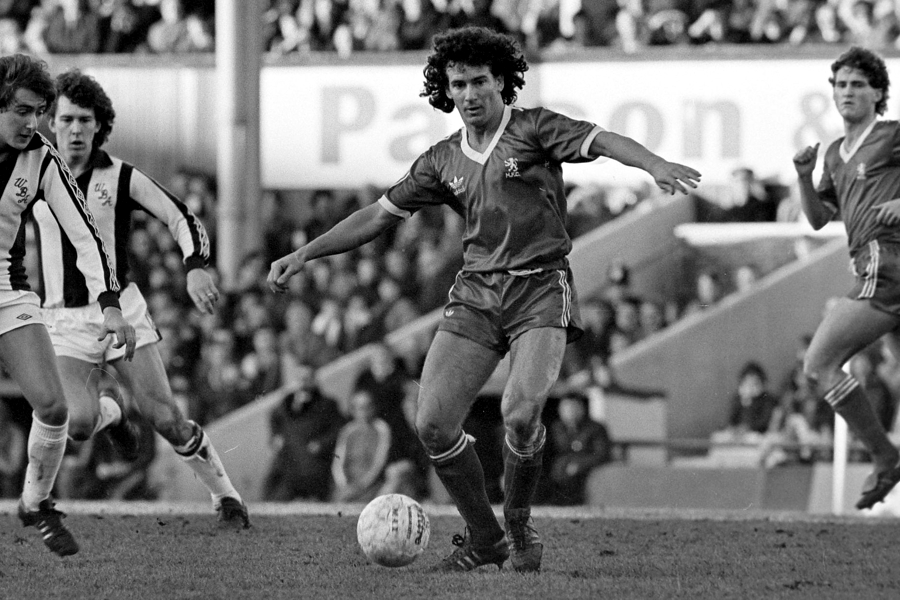
Craig Johnson 1 - crop
Craig Johnson made his debut for Boro in 1978 at the age of 17 in an FA Cup tie against Everton and went on to make 64 appearances for the club

The Diary Opened…

OFB: What do you remember most about him?

DW: A good question because he was such a one-off. In all my years covering football and, indeed, other sports I never came across anyone quite like him. I hasten to add that my comment is meant as a compliment.

From first hearing about this teenager, it was clear he was far from, a run-of-the-mill footballer. Even though he lived in Australia, he had the initiative to write to some English League clubs, suggesting they grant him a trial. Happily, for him, but mostly for Middlesbrough, the Boro were among the few clubs, even to reply. And Craig was delighted that it was a positive response. The answer was Yes.

Now Craig was so well educated, he was expected to study for a top profession like medicine or teaching. Yet his Mum and Dad so backed his hope of being a professional footballer that they sold their home to finance his air trip from the Antipodes.

As a player, his Dad had trials at Preston North End and Dundee United. Having taken up the game with Lake Macquarie City FC in Newcastle, New South Wales, Craig, aged only 14, came over to England unaccompanied.

OFB: His background wasn’t typical, either, was it?

DW: That’s right. Although his parents were Australian he was born in Johannesburg, South Africa, on June 25 1960. It meant that though he eventually played for England’s under-21s he could have opted to play for other countries. While he was still small the family were back in Australia. Considering the footballing career, he was to enjoy, it’s remarkable considering that he was only six when he contracted osteomyelitis and could have lost a leg. His career was saved due to the expertise of an American specialist, who happened to be lecturing then Down Under and treated Craig successfully.

OFB: Did you read him about him first, or did you see him?

DW: His youth and initiative made him the subject of a good story, so it was natural to seek it. Happily, we got on pretty well from the start, so much so, that, unlike so many players these days, he wasn’t loathe to telephoning scribes like me for a chat. Sometimes I’d not be at home, so he’d have a pleasant conversation with my wife, Edna. I remember he told her how he kept feeling cold in England.

OFB: Was he instantly recognizable as a footballer who was destined for greatness?

DW: It would be stretching things to say he headed towards greatness. But I was always taken by his work ethic. He would run and chase for 90-plus minutes and while he was a good tackler himself, he could also take a tackle without complaining

OFB: Did he try and emulate his style of play on any individual player who played in his position?

DW: I wasn’t aware that he did, but he’d have been a good model himself for aspiring young players.

OFB: When did you become friends?

DW: It was whilst a John Neal Boro team was preparing in Jersey for a Cup tie that I got to know Craig even better. Without trying he also provided one of the most unusual stories I’ve reported.

The Boro party and we Pressmen stayed at the Pomme D’or Hotel in St. Helier. The English Channel is just across the road and, at low tide, it was easy to stroll across a long stretch of sand to get to a wee island. Craig did just that and, relaxing on a sunny afternoon, he dozed off. When he awoke, it was to look across at a lot of sea water between him and back to the safety of his hotel. There was only one thing for Craig to do. He’d have to swim back to land, still wearing clothes, of course and that he did!

Craig, of course, had swum a lot near his Aussie home. It was a tale that I was delighted to dictate for the next day’s Daily Mail. Mind you, at least one of his Boro team-mates doubted the veracity of what Craig had recounted. That player would mutter, “Jackanory, Jackanory…” A fairy tale? It certainly wasn’t.

OFB: Was there anything else about Craig’s make-up which surprised or amused you?

DW: Definitely. He was a good mimic. He obviously heard me broadcasting on BBC radio and/or TV because it was amazing how accurately he imitated my Durham accent as I’d often describe a Gary Rowell goal for Sunderland!

OFB: Did he disappoint you at all?

DW: No; it was Boro themselves who disappointed me when they sold him to Liverpool. I was always saddened when the so-called Big Three of North-East Soccer felt obliged to sell good players. That happened far too much in my career.

Craig had made his Boro first-team debut in an FA Cup-tie with Everton and, mainly as a midfielder, had scored 16 goals in 64 appearances before a £650,000 move to Liverpool in 1981.

OFB: But, of course, he had a great career at Anfield, didn’t he?

DW: Not half! As mainly a right-side midfielder, between 1981 and 1988 he won five League Championship medals, two League Cup medals, a Charity Shield medal and was also a European Cup winner.
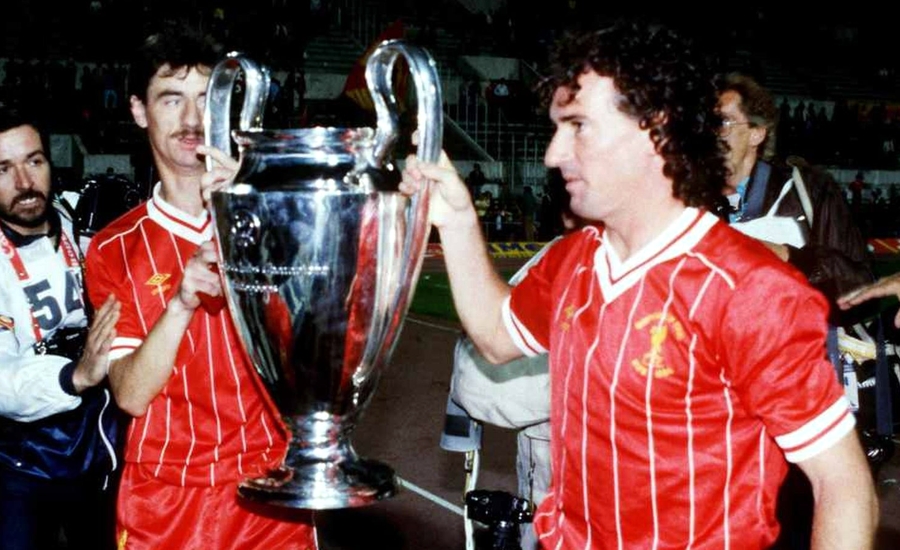
Craig Johnston - European Cup
Craig Johnson had a successful career at Liverpool and won 8 trophies including the European Cup in 1984, which he is pictured with Ian Rush lifting

OFB: So, when he went to Liverpool, the Anfield fans took to him?

DW: Again, not half! They nicknamed him Skippy and he was clearly a crowd favourite. This versatile lad also wrote the club’s Cup final song, “Anfield Rap.”

He had made 271 appearances and scored 40 goals when he angered manager Kenny Dalglish by announcing his premature retirement from Liverpool. Dalglish then relented and gave his blessing when learning that Johnson’s sister was seriously ill after a serious accident in Morocco. She needed constant attention back home in Australia and Craig wanted to provide that and flew back to Australia.

A year after he left Liverpool he raised funds in Australia and flew back to England to attend funerals and memorial services after the Hillsborough disaster. He also dedicated his autobiography, “Walk Alone”, to victims of the Heysel and Hillsborough disasters.

A business career followed his football. He created the prototype for the Predator Football Boot. The innovator however went bankrupt and he was even temporarily homeless, before forging a new career as a photographer.

He’s 58 now and I’ll always have fond memories of him.

OFB: Thank you Doug for opening another page in your impressive Diary about a player whom I will always remember and appreciate the time he spent at the Boro.


If you wish to leave a comment about this Doug’s Diaries article about Craig Johnston please return to the Week 19 discussion page

Boro looking to put defensive blunders behind them

Championship 2018-19: Week 19

Sat 08 Dec – 15:00: Boro v Blackburn

Werdermouth looks ahead to a week where Boro must bounce back…

Such is the pace of this modern life we lead that some Boro followers are already expressing feelings of nostalgia over enjoying a complimentary warm pint of beer and remembering a time when leaving the house to head off for the match without locking the front door wasn’t regarded as a symptom of earlier-onset dementia but just sign of trust that nothing bad would happen. Yes, those hazy sunny days of August, where many wandered around in a dream-like state humming Dvorjak’s ‘New World’ Symphony as Boro made their best start to a season since some crazy jeweller from Iowa decided it would be a good idea to slice the bread before selling it.

Perhaps some weren’t so easily fooled as Tony Pulis’s makeshift team continued to confound their boss as he awaited that phone call from his non-committal targets. After that remarkable last-gasp comeback at Millwall with two late goals, together with that opening 25 minutes of Riverside action that saw them slice into the Blades, many had been left feeling giddier than their uncle’s wife as they struggled to acclimatise to the unexpected arrival of the Pulis goal machine. The lacklustre 1-0 win over the Blues and previous boss Garry Monk wasn’t particularly dwelled upon as a few days later the youngsters delivered a 3-3 draw in the Carabao Cup before winning the tie on penalties. Then following a rare and relatively comfortable 2-0 win at Bristol City, Dani Ayala’s very late and somewhat suspectly-controlled winner against the promotion-fancied Baggies delivered a fourth successive victory along with a fourth successive clean sheet. What could possibly go wrong?

Nevertheless, Tony Pulis was not getting carried away and unbelievably claimed that without significant reinforcements his side would most likely fall away during the season. However, once the loan window had closed and the dust from his crumbled deals had settled, he may or may not have been of a view that his squad had indeed been significantly reinforced. Although, he seemed to quickly decide that it was at least strong enough to discard some of the youngsters who had played a significant role in getting his team off to such a stunning start.

After the club decided against providing the dough demanded by their main targets, the Boro manager was left with few crumbs of comfort from his recruitment team as his squad appeared several slices short of a Wonder Loaf. As to whether there are still many left on Teesside who (as it was claimed in a 1928 article about the invention of the bread-slicing machine by the jeweller, Otto Rohwedder), “might find sliced bread startling”, is possibly something we should only ask in our heads. Though perhaps the sentiments expressed in the article about ‘the typical housewife’ experiencing “a thrill of pleasure when she first sees a loaf of this bread with each slice the exact counterpart of its fellows” may strike a chord with the Boro recruitment department.

In some ways, that possibly describes the problem of the half-baked Boro squad as each player appears to be the exact counterpart of its fellow and often leaves the manager with few options to shuffle his pack and give the opposition something different to chew on. Though it’s quite possible some of the under-performing players will end up as toast come the January window – especially Martin Braithwaite, who has not really turned up since his August move to France failed to materialise and has now started to be panned by his critics.

It’s become increasingly clear that our illustrious August start to the season was deceptively impressive and has masked the reality of the overall performance of the season so far. Indeed, if we were to take away those first five games from our current total of points and goals scored it would give a picture of a team consistently performing far worse than the current table is showing. OK, the old adage that the table never lies may ultimately be true but it can be skewed and perhaps tell the odd white lie occasionally.

If we produce a table of the last 15 games in comparison to the current one of 20, it perhaps better demonstrates that Tony Pulis’s team are not visibly moving forward and looking on track for automatic promotion – in fact they are possibly struggling to even keep up with an outside chance of a play-off place. You might think that this could be the case for many clubs chasing promotion but the last 15 games show us that only Boro would drop out of the top six (seven if you include Derby). It actually sees us down to 11th spot in what is still appears quite a congested table and still clinging only three points behind the play-offs. Though by far the starkest statistic it reveals is that only currently second-bottom Bolton have scored fewer goals in the last 15 games than Boro have. This is ultimately what will probably see Tony Pulis and his team fail to secure promotion and as yet there is no immediate sign that the solution will be found in the near future.

Championship table based on the last 15 games
Pos (now) Team W D L F A GD Pts (now)
 1 ( 1) Norwich City 11  3  1 27 11 16 36 (40)
 2 ( 3) West Bromwich Albion  8  4  3 29 20  9 28 (35)
 3 ( 5) Nottingham Forest  7  6  2 25 15 10 27 (34)
 4 ( 9) Birmingham City  7  6  2 26 18  8 27 (30)
 5 ( 2) Leeds United  7  5  3 19 13  6 26 (39)
 6 ( 6) Sheffield United  7  4  4 24 17  7 25 (34)
 7 ( 7) Derby County  7  4  4 22 17  5 25 (34)
 8 (11) Queens Park Rangers  7  4  4 21 16  5 25 (28)
 9 ( 8) Aston Villa  6  4  5 29 23  6 22 (31)
10 (12) Stoke City  5  7  3 19 16  3 22 (27)
11 ( 4) Middlesbrough  5  7  3 13 11  2 22 (35)
12 (10) Blackburn Rovers  5  5  5 20 26 -6 20 (29)
13 (18) Preston North End  4  6  5 28 28  0 18 (22)
14 (13) Swansea City  5  3  7 17 17  0 18 (26)
15 (14) Bristol City  5  3  7 17 19 -2 18 (26)
16 (15) Wigan Athletic  5  3  7 13 20 -7 18 (25)
17 (21) Reading  4  4  7 22 25 -3 16 (18)
18 (19) Hull City  4  4  7 14 19 -5 16 (20)
19 (16) Sheffield Wednesday  4  4  7 18 28 -10 16 (23)
20 (17) Brentford  3  5  7 21 24 -3 14 (22)
21 (20) Rotherham United  2  8  5 14 20 -6 14 (20)
22 (22) Millwall  3  4  8 19 27 -8 13 (18)
23 (24) Ipswich Town  1  6  8 13 27 -14  9 (11)
24 (23) Bolton Wanderers  1  5  9  7 20 -13  8 (18)

Other points to note in this table is that leaders Norwich look like they’re forging ahead and for all the talk of them scoring goals (more than twice that of Boro in the last 15 games), they’ve also only conceded the same number as Tony Pulis’s defensively-focused outfit during the same period. Interestingly, our place in the top six has been taken by Garry Monk’s Birmingham, who have claimed all but three of their current haul of points in the last 15. Also Villa have fared the same as Boro during this period with 22 points but they certainly look to have found their rhythm and are looking upwardly mobile. Even Karanka’s Forest are looking well placed for a promotion push and they have also scored nearly double what Boro have managed while conceding just four more.

The question is should we be worried or is it something that could be easily turned around? Well the gap to Leeds and Norwich now stands at 4 and 5 points respectively – if that suddenly grew to 7, 8 or 9 then we’re beginning to enter the territory that saw the hopes of automatic promotion for Garry Monk’s Boro end before the Christmas decorations had hardly been up. If you need to win three more games than your rivals over half a season then it becomes a very difficult task – not impossible but little margin for error and also not easy for a low-scoring team.

It’s unlikely that we’ll see a change in methodology from Tony Pulis but can he find a way to play to the strengths of some of our under-performing attacking players – perhaps several of them have lost interest in the Pulis project or have just had their confidence ground down by failing to adjust their game. The £25m strikeforce that is Britt and Braithwaite just don’t look like they have the body language of players enjoying their football – plus how long can we wait for them to adjust? Gestede has barely looked match-fit since he arrived with his stop-start Boro career and has become a lazy signal to hit the ball aimless and long whenever he appears on the pitch. Fletcher may as well not be here if he only gets a few minutes on the pitch every month or so. Our diminished hopes appear pinned on home-boy Hugill adding goals to his all-round busy bustling line-leading role and anticipating that the likes of Tavernier and Wing continue to impress their manager enough to get a start.

We’re still waiting for Howson to show he’s a goal-scoring midfielder and for Downing not to panic when he catches a glimpse of the goalkeeper’s eyes. Will Besic just continue to flatter to deceive? Can Saville enlighten us on how he scored 10 goals last season for Millwall? The question marks are endless and it appears time is short for finding answers if we are to avoid pretty much the same kind of scenario as the last campaign. It may be fanciful to think the club will be able to bring in the ‘right’ players for Tony Pulis in the January window – especially if those paying the cheques get in a muddle again over what constitutes value for money. It’s been hard enough attracting players without a Teesside connection in the first place but expecting them to take a financial hit will make the exercise little more than a time-wasting exercise for all parties. It may be time to target the up-and-coming players who see Boro as step up rather than hope ‘bigger’ names will be persuaded to step down on the cheap.

In the end it is down to Tony Pulis to accept the reality of the situation and do what he did when he first arrived and get the best out of what he’s got. The problem may be that, like Karanka before him, he values more what players do without the ball than with it. Both had a similar belief that one of the main issues is that their strikers need to be more clinical as they pondered why they didn’t get the players they wanted in the transfer window. Both of those points are convenient hypothetical reasons why the team is not scoring goals and it’s easy to pass the buck and imply that you’re operating to the ‘best’ you can in an imperfect world.

Once you’ve convinced yourself that the best policy is to remain tight and nick games then it is a self-fulfilling prophecy as what remains is exactly that. The 3-0 defeat against Villa at the weekend will only be regarded as blip if it isn’t repeated – though it’s likely the same methodology will remain under Pulis as he has been often quoted saying something along the lines that as the game starts at 0-0 you at least have a point to defend.

I’m sure new Villa manager Dean Smith has a quite different philosophy and aims to play a more expansive game in the belief that goals win matches. Pulis on the other hand believes primarily conceding goals loses matches. It seems Dean is prepared to balance the risk of conceding in order to score goals but Tony is most likely not of that view. The question is what offers the greatest chance of success in the Championship? Should a manager simply stick to their belief or should they just try to adjust the balance depending on whether their team is conceding too many or scoring too few. Maybe it’s not possible to change tack without risking undermining your whole credibility. Although I suspect at this level nearly all managers will always need to work within the constraints of an imperfect squad and it’s how they deal with that issue which determines success or failure.

Talking of a Boro manager who encapsulated in phrase the process of accepting their failings in the less than grand scheme of an imperfect world with “It is what it is” – club legend Tony ‘Mogga’ Mowbray returns to the Riverside with his newly promoted Blackburn side on Saturday. Mogga’s Rovers ended a run of six games where they had scored just a single goal in each with a 4-2 win over Sheffield Wednesday – their problem appears to be keeping the opposition out and they have conceded 9 in their last three outings and sound like ideal opposition for a team struggling to find the net. Hopefully Blackburn, or ‘The Riversiders’ as they’re also known, will not feel too at home in a ground with such a familiar name – although they have drawn on their last three visits in the Championship with Boro’s last victory at home being back on Boxing Day 2012 when a Lukas Jutkiewicz goal decided the contest to send the Teessiders up to third. It was a goal that pleased his then manager, who was a certain Tony Mowbray, with other familiar faces playing that day being current captain George Friend, now first-team coach Jonathan Woodgate, plus current club captain Grant Leadbitter and Lewis Wing’s cousin Jason Steele in goal.

It may be a little early to talk about must-win games but the dismal display against Villa needs exorcising if it isn’t to become the beginning of something much more damaging. With Norwich being at home to lowly Bolton and Leeds facing QPR at Elland Road, anything but a win could see the automatic spots begin to disappear over the proverbial horizon. Tony Pulis and the players need a Riverside performance and three points – anything else will have the Boro faithful believing their stale promotion chances are brown bread.

A comparison to how Boro were performing under Garry Monk

Werdermouth crunches a few numbers to compare last season…

At the same stage last season, Garry Monk was under pressure as the summer narrative that he had been given a squad capable of what became unfortunately known as ‘smashing the league’ was not going to plan. The supporters were vocal in their criticism that their manager appeared to be not getting the best out of his apparent riches.

Coincidently, Boro had just been beaten 3-0 at the Riverside by promotion rivals Derby and followed it up with a 2-1 defeat at Bristol City to leave Garry Monk’s team sitting in 9th place and six points outside the play-offs. It was perhaps the beginning of the end and maybe the point at which the decision was made by Steve Gibson to seek an alternative. Despite winning two of his next three games, Garry Monk was dismissed after just 23 Championship games.

We could maybe assume the decision to part company was probably taken around Game 20 before Monk won two of his next three games. If so, it would be curious to see how Monk’s Boro would compare in the same test of looking at their last 15 games before that point. What’s interesting is that his team had also achieved the exact number of points as Tony Pulis’s has with 22 in those same 15 games – though Monk had a better goal difference with +4 instead of +2.

Perhaps the decisive factor was that the other teams chasing promotion were performing slightly better last season than this term and had made Monk’s team appear to be performing relatively worse. Although, Fulham and Millwall had only just started their impressive runs that saw them rise up the table, the current top six were moving away from Boro.

2017-18 Championship table based on Games 6-20
Pos Pts 1-20 Team W D L F A GD Pts Pts 1-20
 1 ( 1) Wolves 12  1  2 34 13 21 37 (47)
 2 ( 5) Aston Villa  9  4  2 22  9 13 31 (36)
 3 ( 3) Bristol City  9  4  2 25 15 10 31 (37)
 4 ( 6) Derby County  8  4  3 25 14 11 28 (35)
 5 ( 4) Sheffield United  9  1  5 28 20  8 28 (37)
 6 ( 2) Cardiff City  8  4  3 20 12  8 28 (43)
 7 (11) Brentford  6  7  2 26 18  8 25 (27)
 8 ( 9) Middlesbrough  6  4  5 21 17  4 22 (29)
 9 (12) Sheffield Wednesday  5  6  4 21 19  2 21 (27)
10 (10) Preston North End  5  6  4 21 20  1 21 (29)
11 ( 7) Ipswich Town  6  2  7 26 24  2 20 (32)
12 (15) Fulham  5  5  5 22 24 -2 20 (26)
13 (16) Norwich City  5  5  5 12 14 -2 20 (24)
14 (14) Reading  5  4  6 21 19  2 19 (26)
15 ( 8) Leeds United  6  1  8 23 23  0 19 (30)
16 (13) Nottingham Forest  6  0  9 20 25 -5 18 (27)
17 (17) Millwall  4  5  6 14 15 -1 17 (22)
18 (18) Queens Park Rangers  3  6  6 16 23 -7 15 (22)
19 (19) Barnsley  3  5  7 17 24 -7 14 (20)
20 (21) Bolton Wanderers  3  5  7 15 27 -12 14 (16)
21 (20) Hull City  2  6  7 22 30 -8 12 (19)
22 (22) Birmingham City  3  3  9  7 23 -16 12 (16)
23 (24) Burton Albion  2  4  9  8 29 -21 10 (14)
24 (23) Sunderland  1  6  8 21 30 -9  9 (14)

Does this exercise actually show us anything meaningful? Well it may perhaps tell us that perceptions of how a manager or team is performing are related to expectations. Garry Monk was basically put in the position where automatic promotion was expected after the pre-season hype that Boro had supposedly bought the best team in the Championship – which was seemingly based on the price-tags paid for the new arrivals. Additionally, people will obviously look at the current table and make judgements based on how the club stands in relation to their rivals.

In the end Monk was judged to be failing to deliver and most weren’t too surprised to see him given the hook. Even though Pulis’s team has performed at almost the same level as Monk’s did since August, Boro are still positioned quite well in the league and there isn’t a groundswell of feeling that the club need to change the manager. Perhaps Pulis has connected better with the supporters and people can see he has a method in his approach, which he had proved last season would at least make the play-offs. Therefore his position appears most probably not in danger from his chairman either and he will be planning on hopefully getting a few players in January to help his cause. However, if Boro were to slip out of the top six in the coming weeks and performances on the pitch (particularly at the back) were below standard, then it could be an uncomfortable Christmas again for a Boro manager.

The main difference in terms of overall points between the two managers at the same stage in the season (35 versus 29) is that back in August Monk lost 1-0 at Wolves and 2-1 at Forest to start the opening 5 games with 7 instead of 13 points – the next 15 games panned out almost the same as they both acquired 22 from a possible 45. Incidentally, after Monk left Boro he successfully took on the task at Birmingham of saving them from relegation and we can see from the first table (shown in blue) that his Blues have out-performed Tony Pulis’s Boro during the last 15 games by five points. Given the similar failings in consistently getting close to that magic two points per game, perhaps the problems at Boro have less to do with who’s in charge and more to do with those responsible for putting the squad together.

Pulis hoping for 20-20 vision to pass next promotion test

Championship 2018-19: Week 18

Tue 27 Nov – 19:45: Preston v Boro
Sat 01 Dec – 17:30: Boro v Aston Villa

Werdermouth looks ahead to the 20-game mark in the Championship…

Time to discard those rose-tinted glasses and focus on the reality of another tough week in the Championship. This weekend will see us reach Game 20 in the current campaign and a chance to ponder over our promotion prospects this season. Back-to-back victories either side of the international break have positioned Boro quite nicely in second spot and two more wins this week could see Tony Pulis’s team edge ahead of their rivals in the race for the Premier League.

2018-19 Championship Table after 18 Games
# Team P W D L F A GD Pts
 1 Norwich City 18 11  3  4 32 21 11 36
 2 Middlesbrough 18  9  7  2 21  9 12 34
 3 Leeds United 18  9  6  3 31 17 14 33
 4 West Bromwich Albion 18  9  4  5 39 26 13 31
 5 Sheffield United 18  9  4  5 29 21  8 31
 6 Derby County 18  9  4  5 27 21  6 31
 7 Nottingham Forest 18  7  9  2 25 16  9 30
 8 Aston Villa 18  7  6  5 31 25  6 27

In some ways, Boro followers have been spoilt in their last three Championship seasons after finishing in the top six on all occasions, which ultimately saw one automatic promotion and a play-off final defeat against Norwich. With this term also shaping up to be more of the same, supporters of other clubs must glance towards Teesside with feelings of envy.

Perhaps we can look at those previous campaigns and compare how Boro were placed at the similar stage in the season at Game 20. Interestingly last season, Garry Monk’s stop-start team were sitting in sixth spot after 18 games on 29 points before two successive defeats (0-3 at home to Derby and 1-2 away at Bristol City) saw Boro slip down to ninth. Looking at the table then showed that any prospect of smashing the league had gone and more worryingly any thoughts of automatic promotion was not even cylinder of foam fumes away.

2017-18 Championship Table after 20 Games
# Team P W D L F A GD Pts
 1 Wolverhampton Wanderers 20 15  2  3 41 17 24 47
 2 Cardiff City 20 13  4  3 30 14 16 43
 3 Bristol City 20 10  7  3 32 21 11 37
 4 Sheffield United 20 12  1  7 33 24  9 37
 5 Aston Villa 20 10  6  4 29 18 11 36
 6 Derby County 20 10  5  5 30 21  9 35
 7 Ipswich Town 20 10  2  8 35 30  5 32
 8 Leeds United 20  9  3  8 30 25  5 30
 9 Middlesbrough 20  8  5  7 25 20  5 29

Big-spending Boro looked a busted flush as they sat a whopping 18 points behind Wolves and surely now an insurmountable 14 from an automatic spot. It must have been at this point that Steve Gibson decided Monk’s tenure was up as promotion looked to be slipping away. Despite beating Ipswich at the Riverside, he then lost at Millwall before winning in vain at Sheffield Wednesday, only to be dismissed at the 23-game halfway point.

In the end, Boro probably did well to finish in the play-offs and coincidentally the last four games were against the same teams as the ones that had ultimately undone Monk. However, under Pulis, Boro won three on the spin in the reverse fixtures against the Robins, Rams and Lions before getting the point they needed at the Tractor Boys. Nevertheless, Boro still ended the season as they had been after 20 games, 14 points behind an automatic promotion spot. It shows that playing catch-up at the top of the table is not easy and falling significantly behind your rivals around the halfway point means it’s a big ask to claw back the gap.

2017-18 Championship Table after 46 Games
# Team P W D L F A GD Pts
 1 Wolverhampton Wanderers 46 30  9  7 82 39 43 99
 2 Cardiff City 46 27  9 10 69 39 30 90
 3 Fulham 46 25 13  8 79 46 33 88
 4 Aston Villa 46 24 11 11 72 42 30 83
 5 Middlesbrough 46 22 10 14 67 45 22 76
 6 Derby County 46 20 15 11 70 48 22 75
 7 Preston North End 46 19 16 11 57 46 11 73
 8 Millwall 46 19 15 12 56 45 11 72

Back in 2015-16, Boro had reached the 20-game mark under Karanka in good shape as they sat in second spot on that perfect two-points-per-game target of 40. Everything looked on course for automatic promotion and Boro looked unstoppable six games later when they topped the table on 55 points, six clear of Derby in third spot and a massive ten ahead of Burnley in fourth. Though we know now that the easy way is not the Boro way and a wobble was just around the corner as Karanka’s team lost the next two before drawing the following three.

2015/16 Championship Table after 20 Games
# Team P W D L F A GD Pts
 1 Brighton & Hove Albion 20 11  9  0 29 18 11 42
 2 Middlesbrough 20 12  4  4 29 12 17 40
 3 Hull City 20 11  5  4 29 13 16 38
 4 Derby County 20 10  8  2 28 13 15 38
 5 Burnley 20  9  8  3 26 19  7 35
 6 Ipswich Town 20  8  7  5 29 27  2 31
 7 Cardiff City 20  7  9  4 24 20  4 30
 8 Sheffield Wednesday 20  7  9  4 27 24  3 30

The cushion at the top was no longer comfortable as Boro sat just one point ahead of Brighton in third, with Burnley another point further back. The pressure was now on and after defeat at Rotherham it lead to the now infamous Chaltongate as Karanka reached meltdown. It seemed Boro were set to implode but somehow the club rallied to win the next six games before drawing the next three. It left Boro needing to avoid defeat at home to Brighton in the final game in what was essentially a pseudo play-off final. After Stuani had given Boro the lead it looked good but Dale Stephens equalised in the 55th minute to add to the nerves. However, the Brighton scorer then got himself sent off four minutes late and a weary Karanka team limped over the automatic promotion line.

2015/16 Championship Table after 46 Games
# Team P W D L F A GD Pts
 1 Burnley 46 26 15  5 72 35 37 93
 2 Middlesbrough 46 26 11  9 63 31 32 89
 3 Brighton & Hove Albion 46 24 17  5 72 42 30 89
 4 Hull City 46 24 11 11 69 35 34 83
 5 Derby County 46 21 15 10 66 43 23 78
 6 Sheffield Wednesday 46 19 17 10 66 45 21 74
 7 Ipswich Town 46 18 15 13 53 51  2 69
 8 Cardiff City 46 17 17 12 56 51  5 68

If we’re looking for comparison’s to this season, then it’s perhaps the previous campaign under Karanka that saw the Championship table similarly tight at the 20-game point. Just two points separated the top four with no team on that famous two-points-per-game trajectory. Though what was interesting to note was that Boro were knocking in the goals and had amassed 33 in those opening 20 games – including two 4-0 home wins against Brentford and Norwich, plus a 5-1 thrashing of Millwall at the Den. Tony Pulis’s team will need to go on an amazing scoring spree this week and fire in 12 goals to match that feat – though the manager seems to believe it’s just matter of converting our plethora of chances.

Interestingly, by Game-30, Boro went to the top of of the table but were just one point ahead of Bournemouth in second and Derby in third. Then with ten games left to play, four of the promotion rivals (Bournemouth, Derby, Watford and Boro) were all locked together on 66 points, with Norwich just a point behind on 65. Getting to the Premier League has now become a ten game shoot-out and with five left to play still only two points separated the top four.

2014/15 Championship Table after 20 Games
# Team P W D L F A GD Pts
 1 Derby County 20 11  5  4 38 19 19 38
 2 Ipswich Town 20 10  7  3 32 20 12 37
 3 Bournemouth 20 10  6  4 39 21 18 36
 4 Middlesbrough 20 10  6  4 33 15 18 36
 5 Brentford 20 10  4  6 31 26  5 34
 6 Watford 20  9  5  6 36 22 14 32
 7 Blackburn Rovers 20  8  7  5 31 28  3 31
 8 Norwich City 20  8  6  6 30 24  6 30

Boro won their next three games and were just one point from top spot before that fateful game at Craven Cottage. It was a remarkable game that saw Boro go into the break behind after the home side scored just before half-time. When Fulham doubled their lead, Karanka made a triple substitution on the hour mark and it paid immediate dividends when Reach got one back. Sadly the comeback looked doomed when Ross McCormack scored from the spot to make it 3-1 but Boro would not give up and clawed it back to 3-3 with headed goals from Ayala and an 88th minute equaliser from Kike. Boro sensed victory and Dimi made the decision to come up for an injury-time corner – unfortunately, Fulham broke out and McCormack got his hat-trick as he placed the ball into an empty net. It was typical Boro personified and with one game to go Boro’s automatic promotion chances had ended.

2014/15 Championship Table after 46 Games
# Team P W D L F A GD Pts
 1 Bournemouth 46 26 12  8 98 45 53 90
 2 Watford 46 27  8 11 91 50 41 89
 3 Norwich City 46 25 11 10 88 48 40 86
 4 Middlesbrough 46 25 10 11 68 37 31 85
 5 Brentford 46 23  9 14 78 59 19 78
 6 Ipswich Town 46 22 12 12 72 54 18 78
 7 Wolverhampton Wanderers 46 22 12 12 70 56 14 78
 8 Derby County 46 21 14 11 85 56 29 77

Given all that excitement, it makes you sometimes wonder why Boro supporters want to leave the Championship. Still it’s the goal of making the top tier, no matter how fleeting, that drives that excitement and this week may determine how the season will eventually pan out. Tuesday evening sees Tony Pulis’s side make the trip to Deepdale, hoping to make it three wins in a row against a Preston side that have started to get their act together after a somewhat indifferent start. Having won their opener against QPR, Alex Neil’s side then failed to win any of their next nine games and dropped to bottom place on just five points.

However, since then they have won four and drawn four of their last eight games and have moved up to 16th spot. Indeed, Boro will need to be wary as they’ve netted four goals in three of their last four home games. What had a few weeks ago looked like a decent chance of three points, now must be treated as a game where Tony Pulis’s team will need to play well to return back to Teesside with even a single point. It may even be a game that the Boro manager will contemplate playing with three central defenders and a chance for Ayala to get back in the team. The question for many is whether that would be at the expense of Tavernier rather than a central midfielder – the youngster did well against Brentford and his confidence must be high after his well-taken goal.

Saturday sees yet another tea-time televised game for Boro as they host Aston Villa at the Riverside. After an indifferent season that has seen Steve Bruce shown the door, new manager Dean Smith has stared to get his players firing after recording three successive victories. Villa have now crept back up to 8th in the table, with those three wins seeing them score nine goals in the process. Again, this was another fixture a few weeks ago that looked a home banker for Boro but they once more face a team in form and finding the net. Both games this week will likely be a test of Boro’s impressive defensive record and it will need to be at its best if Tony Pulis is to consolidate his team’s position in the automatic promotion places.

Hopefully, come Saturday evening Boro will be a perfect vision at the 20-game mark as they sit comfortably on 40 points at the magic two-points-per-game. The worry for many on Teesside is that we now face two teams who could leave everyone looking over their shoulder – though surely not in the same way the ill-fated Garry Monk did one year ago.

Boro return to negotiating a successful Championship exit

Championship 2018-19: Week 17

Sat 24 Nov – 17:30: Brentford v Boro

Werdermouth looks ahead to the resumption of the Championship…

There’s been much talk this week about leaving a European institution and the financial implications of doing so – though reports of whether a so-called group of elite clubs have indeed secretly struck a deal to usurp the Champions League and form a European Super League have so far been denied. It’s unclear at this point whether Boro are among the 16 who hope to get an even bigger slice of pie in the Sky deal under the proposed breakaway plan – though as yet the club have neither denied or admitted any involvement in the matter. However, before people on Teesside are prepared to associate the words ‘Middlesbrough’ and ‘elite’ with more than just a Taxi firm (other less exclusive named mini-cabs are available), Boro must first breakaway from the financial constraints of the Championship league. Especially after the somewhat loose change new TV deal was sneaked past the clubs, which wouldn’t even allow the club to pay for half a Rudy Gestede or Britt Assombalonga’s devalued left leg.

Indeed, it seems not only football supporters have become pre-occupied with European breakaways and paying billions for a new deal. I may be missing some details but it appears to involve pretending to read a very dense book before embarking on the longest game in history of ‘Call my bluff’ where the panellists struggle to offer a convincing definition of the the word ‘Brexit’ – all that is missing is a frustrated hologram of Robert Robinson in a bowler hat setting fire to the only ‘True’ card live on air. As the people desperately look for leadership, the international breaks at least provided us with one man who appears to be both popular and articulate – yes the odds on Gareth Southgate becoming the next prime minister have been further slashed after qualification to yet another semi-final. One can only imagine the scenes should a future Lord Gareth of Southgate actually win a trophy as the petition to make him UK President for life exceeds the 17 million mark in an unstoppable populist uprising.

One man who is unlikely to be distracted by pleasing the crowd is Tony Pulis and his steady approach of playing the percentages has been the basis of his footballing philosophy over the years. He’s also a man who has previously appeared ambivalent about remaining in Europe – with his only venture being in 2012-13 Europa League with Stoke where he exited in the last 32 after fielding a second-string side in a 1-0 defeat at Valencia. Perhaps the only withdrawal agreement he’ll be spending much time contemplating is the one from Steve Gibson’s bank account in January as he prepares to bolster his squad for an orderly exit from the Championship.

You will recall Pulis was thwarted in the summer from bringing in pacey wide players when Boro’s chief negotiator, Neil Bausor, maintained no deal was better than a bad deal as the club opted against signing up to the financial packages being floated. After failing to get their targets, it was then decided, any deal was better than no deal, as the holes in the squad were quickly filled with loan players who didn’t have much pitch time under their belts after limited opportunities at their parent clubs.

The Boro manager will hope that the lack of freedom of movement between his midfield and forwards can be resolved before a single market intervention in the upcoming transfer window. The stability of Boro’s position in the table has probably become an issue of supply and confidence when it comes to the performance of their strikers – it may still be possible for the coaching staff to whip the players into shape but the team can not always rely on the opposition to get them over the line with defensive errors and crucial own-goals.

The next six weeks may determine the futures of some of Boro’s strikers and whether they will become remainers or leavers in the January window. After his brace against Wigan and all-round performance, it is now hoped Jordan Hugill will offer a much-needed spearhead for a promotion campaign. The problem is that there has been little to suggest the club have a credible alternatives if the West Ham loanee is unable to build on that much welcome display or indeed is unavailable for selection. While it’s possible that Britt and Rudy are kept in the shop window over the next 9 games or so, it’s becoming harder to envisage they will be viewed as the players who will lead the line under Pulis. One player who is not looking to leave in January is Martin Braithwaite, he confirmed while on international duty that he’s committed to helping Boro to achieve promotion this season – though he was non-committal beyond the summer. Whether Ashley Fletcher has an opportunity to revive his Boro career may depend on impressing from the bench – though he first must win a seat on that crowded bench of mainly summer acquisitions.

As for who could be on the Tony Pulis’s wish-list in January? Well the usual ageing suspects have been linked and even Peter Crouch, who has been mention tongue-in-cheek in previous articles, has started to get serious mentions from some pundits in the media – perhaps more out of lack of imagination and due to him being a big former-player under Pulis at Stoke. Though if you’re looking for a name that shouts buy, then Borussia Dortmund’s hot property Christian Pulisic must certainly tick the nomenclature boxes for a regular church-going Boro manager – however, he’s apparently keen on a Premier League switch with Chelsea being reported as favourites for his signature. Still, I’m sure the club will be keen to find another Pulisic striker who fits their manager’s profile.

Although, those on Teesside hoping for an early intervention in January may need to be patient as any significant deals usually go down to the wire. Whether Tony Pulis will be prepared once more to have his patience tested beyond the eleventh hour in order to get his man is unclear. He may be resigned to the fact that playing the waiting game has become something of a national pastime in post-referendum Britain and being able to stare at a ticking clock without blinking as it’s poised to strike twelve has now become regarded as a sign of cool negotiation rather than an inability to tell the time.

The sight of Brexit’s Midnight Runners as they prepare in vain to sing yet another chorus of ‘Come on Arlene’, in the hope of persuading the DUP leader not to trip everyone up as the marathon approaches the finishing line, may further dishearten the Boro manager that good things do indeed come to those who wait. Nevertheless, Jacob Rees-Mogga has worked himself up into a complete vassal state over the proposed deal but has yet to convince many that ‘it is what it is’ makes any more sense than ‘leave means leave’ or ‘Brexit means Brexit’. His well-spoken old-school tie cavalier tone insists that it’s perfectly reasonable for the UK to trade on something which I think is known technically as WTF rules.

At least everyone on Teesside is more than happy with the Irish backstop as Darren Randolph continues to ensure a hard border is maintained on the Boro goal-line with the fewest goals conceded in the Football League. Boro’s place in the automatic positions has been built on being strong and stable in defence – it’s more solid rather than spectacular – though the hope is that Tony Pulis will be able to successfully negotiate a transition period towards a more potent style in the final third. Nevertheless, despite a lack of goals from Boro, our tight defence means we now have the second best goal difference – just one behind Leeds and West Brom, who have jointly conceded 42 compared to our miserly 8.

Sadly, only a very late injury-time winner from Norwich prevented Boro from going into the international break in top spot – something that is quite unexpected given that Tony Pulis’s team have only won four of their last ten games after that first defeat of the season at Carrow Road. In some ways, Boro have been lucky that only a previously struggling Canaries side have gone on any kind of winning run after picking up 25 points from a possible 30. The next best ten clubs have only managed up to two points more or less than Boro’s total of 17 over those last ten games. It means the table is congested and still waiting for someone to make a decisive move to escape the pack.

Boro resume their campaign on Saturday evening with the televised trip to Brentford – a game that was perhaps chosen for live viewing back in September as a possible top-of-the-table encounter. The Bees had been buzzing at the start of the season and had established themselves as top-six contenders. Despite a few draws, they were still sixth after ten games just three points behind Boro and Leeds. However, they’ve managed just one win from their last ten games, with the departure of their former manager Dean Smith to become Villa boss no doubt being a major factor. Brentford are now down in 15th spot under Danish assistant Thomas Frank after he was promoted to head coach in October. In theory, this could be an opportunity for Tony Pulis’s men to pick up three points but it should be noted that the Bees have only been stung once at home this season with a 1-0 defeat at the hands of Bristol City – they’ve actually won five and drawn two of their other Championship games at Griffin Park.

Naturally, Boro’s aim is to win promotion and as things stand they are as well placed as anyone else. Interestingly, if the team were to lose at Brentford they would only be two points better off than Garry Monk was at the same stage last season. The difference is perhaps that Tony Pulis has developed a style of play that the players have both bought into and understand. Whether Boro can kick on and become effective at both ends of the pitch will determine if those on Teesside stay loyal to the manager. It was at this point last season that after Monk lost three games from his next four that Steve Gibson decided to pull the plug – Derby (H) 0-3, Bristol (A) 1-2, Millwall (A) 1-2. I doubt very much that if Pulis lost three from the next four, the chairman would even consider dismissing him. It seems the current manager is trusted to get it right and he has been helped by being part of a Championship that doesn’t currently have any outstanding sides to measure him against.

Football may be driven by the fear of missing out and each year the stakes are raised as the gap between being part of the elite or the aspirational masses becoming ever greater. We saw how some of the richest clubs in Europe thought they could flex their muscles and demand even more by creating a ring-fenced Super League with guaranteed no relegation for 20 years. Whether they actually intended to go through with the idea is anyone’s guess, but just the threat meant UEFA will offer them more. Talks of a Premier League 2 is perhaps just rebranding hype but the truth is that there are always those ready to buy into it as the fear of missing out also drives the media companies too. It is a bubble that will probably one day burst but right now nobody believes it will.

Of course, the masters of making money from football are FIFA and this week an article claimed that they are in the process of transferring their assets. Reports in the German newspaper Süddeutsche Zeitung claim they have received documents that have revealed secret plans by FIFA president Gianni Infantino to sell all the organistions rights to a consortium of British-based commercial banks that have close ties with Saudia Arabia. The $25 billion deal apparently includes the new Club World Cup, a proposed World League and even the World Cup itself. There are some suggestions in the article that it’s being done to escape the fallout from a corruption investigation into the awarding of the 2022 Qatar World Cup by FIFA. It essentially removes all of FIFA’s financial assets and places them under the control of a different company that will be headed by Infantino himself. It may even see the next World Cup being held in Saudia Arabia as part of the deal.

For the average fan, they are increasingly now just along for the ride and most will demand that their club tries to compete at the highest level possible. Most Boro supporters will want to see their club in the Premier League as it will at the very least promise another few years of parachute payments and a chance to compete with the ever-growing number of clubs in the Championship with overseas wealthy owners. Who know we may even get lucky and once more become an established top-flight club. For now we must hope the end justifies the means.

In2views: Steve Vickers

The latest in a series of profiles and interviews, Orginal Fat Bob gives his personal view on the life and career of a footballing guest, before sitting down for a chat and asking a few questions. Our Diasboro special guest this week is Steve Vickers.

1. The Overview – the man and his career

Steve Vickers was born in 1967, but still looks fit enough to play football today. He cycles many miles with his neighbour, another former Boro player, David Hodgson and is another of the ex Boro players who acts as a match-day host and ambassador at the Riverside Stadium. His height of 6ft 1in would probably mean he wouldn’t be a member of a Tony Pulis team, but in the heady days of the Robson era, he was an integral part of the team surrounded by the world class superstars that the team contained at the time of his playing career.

Steve Vickers, Middlesbrough  (Photo by Neal Simpson/EMPICS via Getty Images)Steve Vickers joined Boro on 3 December 1993 from Tranmere Rovers for £700,000 and made his debut the next day in a 0-0 draw at Bristol City
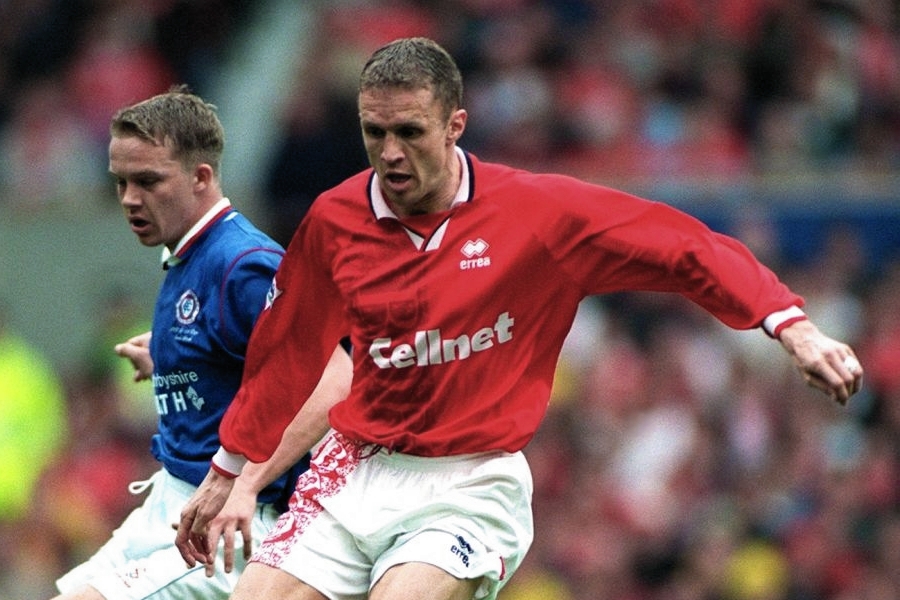
I see Steve on most match days and we were once near neighbours in Marton, Captain Cooks birthplace, just outside Middlesbrough. He rented a house from Mark Proctor for a while, although we have both since moved away from that location. He made nearly 600 appearances in the Football League and the Premier League, the majority of which were for Tranmere Rovers and Middlesbrough. Whilst with the Boro, he was a member of the team that played in the 1997 FA Cup Final, which I remember well after flying back from Argentina to be there and then returning the next day.

He was born in Bishop Auckland, County Durham, and played non-league football for local club Spennymoor United. He then began his professional career at Tranmere Rovers, where he came to the attention of the Boro as a no-nonsense and classy defender in England’s lower league. When he joined Boro in 1993 he went on to win the club’s Player of the Year Award for the 1993–94 season. After playing for us, and being a great servant to the club, he was loaned to Crystal Palace in 2001, then to Birmingham City later that year.

This deal was then made permanent for £400,000, and he helped Birmingham gain promotion to the Premier League in the 2001–02 season. He scored his only goal for the club that season, against Stockport County. He retired from playing at the end of an injury-plagued 2002–03 season, which included a knee operation before the start of the season, a broken rib in his first game back and a badly-gashed ankle following a two-footed challenge from Everton’s Wayne Rooney which resulted in Rooney’s first senior red card.

Steve Vickers 1 - cropSteve’s 259 appearances at Boro spanned 9 seasons, including 6 in the Premier League, and was part of the Riverside revolution under Bryan Robson
Steve Vickers is like all the ex-players that I meet at the club and share many things in common: A pleasing and warm personality, a desire to talk to the fans and a willingness to let us at Diasboro know of their personal experiences at the Boro.

2. The Interview – a quick chat

OFB: What year did you join Boro as a professional footballer?

SV: 1993

OFB: Who was your favourite Boro player and others that you have played with?

SV: For me, Juninho, will go down as an all-time great for Middlesbrough, but I was lucky to play with a lot of world class players.

OFB: Who were the best and worst trainers in the team?

SV: The best trainers were the ones who also played week in week out like your Mustoes and Flemings and possibly me, but the worst trainers were some of the foreign lads who weren’t keen on the British weather.

OFB: When did the team travel for away games, how did they get there, by bus or by train?

SV: We would travel on a Friday before the game usually by coach but sometimes fly to certain games that were at the end of the country like Southampton.

OFB: How many players usually travelled and did the Directors travel with you?

SV: About 15 or so players and coaching staff would travel, but Directors would travel separately to the game.

OFB: Did you have nice hotels or was it just bed and breakfast?

SV: No, we stayed in some very nice hotels.

OFB: Who did you room with for away matches?

SV: My room-mate at the time was Robbie Mustoe.

OFB: Who was the joker in the team?

SV: Nigel Pearson was one, but the biggest was of course Gazza.

OFB: Can you tell us any amusing anecdotes or pranks that were played?

SV: Well the obvious one for Gazza of course, was when he took the team coach from the training ground to put a bet on, only to bring it back with a giant gouge in the side of it. A costly trip if I remember rightly!

OFB: Whose boots did you clean as an apprentice and who cleaned yours?

SV: I was never an apprentice as such, but classed as a young professional at my first club Tranmere Rovers, so I ended up cleaning every player’s boots along with another young professional called Daryl Grierson a goalkeeper from Blackpool along with picking up kit and cleaning the dressing rooms and showers, as for who cleaned my boots I can’t remember.

OFB: Did you try and emulate your style of play, on any individual player who played in your position?

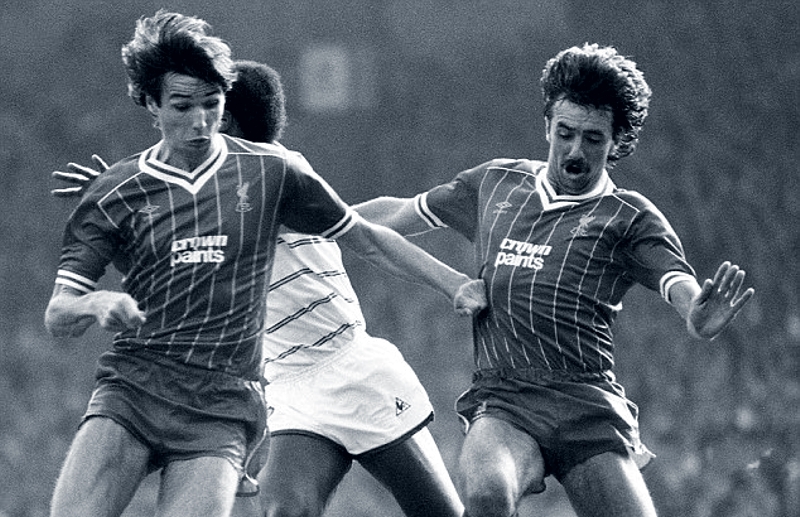
Hansen and Lawro - cropSteve studied the Liverpool defensive duo of Hansen and Lawro in the hope of learning how to avoid “shocking defending” as one of them might say



SV: I used to enjoy watching how Alan Hansen and Mark Lawrenson played the game at Liverpool, but I wouldn’t say I tried to emulate them but maybe watch and try and learn how to manage different situations in the game as they did.

OFB: What was your most memorable game, your own individual performance and best experience with the fans?

SV: Three major cup finals were the most memorable, along with beating Liverpool at home in the league cup probably because I scored as well and the fans that night were the loudest I’ve ever heard at the Riverside.

OFB: What was your worst game or experience and why?

SV: Any time you score an own goal or the game you are relegated are the worst experiences you can have as a player.

OFB: Is there a game that you wished you had played in, either for Boro, or another team?

SV: Probably the World Cup final for Brazil 1970 what a team that was!

OFB: Who was in your opinion the Boro manager that had the greatest influence on your career and why?

SV: I only played under one, that was Bryan Robson.

OFB: Which opposing team and which player did you fear playing against?

SV: I never feared playing against anyone, but you must be able to adapt to different players you are playing against.

OFB: Which opposing team and which player did you like playing against?

SV: Any player you knew you were getting the better of.

OFB: Who is your favourite Boro player of all time and why?

SV: Juninho, because I had the pleasure of playing in the same team.

OFB: Who is your current favourite Boro player and why?

SV: Jonny Howson has great energy and puts in a lot of effort every time he plays.

OFB: If you could be a fly on the wall, is there any dressing room you would wish to eavesdrop on?

SV: Manchester United, to see if Jose Mourinho is as miserable as he usually looks.

OFB: Do you have any regrets in your career, or missed opportunities?

SV: I wish I’d been good enough to represent my country as do a lot of players.

OFB: Do you still follow the Boro and their results?

SV: I still work at the club on match days in corporate hospitality.

OFB: Whereabouts in the Country do you live these days and what do you do?

SV: I live near Richmond North Yorkshire and I am a director in a property investment company called “Investicity” and also work for “Solaire” heating products.

OFB: Whom have you made a lifelong friend through football?

SV: Robbie Mustoe and Curtis Fleming would be two of the closest friends I’ve made in football but I also have a lot of very good friends as well.

OFB: Finally, if you hadn’t had a professional career as a footballer, what do you think you would have done as a career?

SV: As I didn’t join a professional team till I was 17, I was going to join the RAF before that, but football was always going to come first.

OFB: A huge thank you Steve, for taking the time to talk to Diasboro and our readers.

If you wish to leave a comment about OFB’s latest In2views article with David Hodgson please return to the Week 15 discussion page

Pulis looks to keep promotion on the menu as stakes raised

Championship 2018-19: Week 15

Sat 10 Nov – 15:00: Boro v Wigan

Werdermouth looks ahead to the week before another international break…

Tony Pulis announced last week that he’s hoping to emulate his achievements at Stoke with Boro and wants to build something that will last on Teesside – other than a presumably a goal drought. The Boro manager believes he’s on track after sorting out the team defensively and now is looking to add goals (note the plural). Pulis cited his time at the Potteries as the model for how he plans to progress and claimed: “It took us a year to sort everything out and then the second year, we got a team together which we felt would score goals.” The good news for Boro followers is that Tony Pulis has nearly been on Teesside for a year now and we’ll soon be into that second year phase where those seldom seen things he mentioned should apparently begin to flow.

Nevertheless, the warning that the Boro manager made is that “Trying to maintain that togetherness and mentality where you need to be on it week in, week out, over a long period of time, can be difficult.” He added: “What happens is complacency, you get used to playing against the big sides, you get used to getting served steak and chips every night. And it becomes a bit bland and not as tasty as it was when you are only getting it once a week.” OK, getting spoilt with a rich diet may apply to the Premier League but when it comes to bland offerings, much may depend on the quality of the meat being sourced by those in charge of doing the shopping at the cash and carry. Boro appear to be making a meal of promotion lately and another unpalatable goalless affair at the Riverside dining club on Saturday will certainly feel like a kick in the tenderloins for many growing tired of the house speciality.

Goals from Boro players have perhaps become a bit like the steak the Boro manager got so used to eating every day – rare! Though despite having chances regularly served on a plate, it seems our strikers have strangely opted for the butter knife as they lack that cutting edge when it comes to tucking in. The beef of many supporters is that they’ve been forced into a less than satisfying vegan diet as Boro seemingly can’t score for Tofu. Indeed, some of the less than red-blooded observers at the Riverside may even be starting to fear for their safety after food critic William Sitwell was sacked as editor of Waitrose magazine for saying he’d like to print a feature on “killing vegans, one by one”– though those still with the strength will hope their carefully clutched Parmo can shield them from the the meat-eater massacre planned by the Eton hack.

Talking of a Boro striker who Tony Pulis feels is spending too much time on his rump, Jordan Hugill got mixed reviews from his manager after it didn’t sit well with him that he appeared to be spending too much time pursuing a career in amateur dramatics. Pulis complained that the West Ham loanee was prone to falling to the ground without good reason and declared rather ominously: “I’ve had a chat with Jordan” – I suspect it wasn’t of the small talk variety either as he explained: “I thought Jordan went down far, far too easily a couple of times today. I don’t want that as a manager. That’s not right. We’ve sorted that out after the game. I don’t like all that nonsense. That’s got to stop, and he’ll know that now.” Hugill should have realised that under Pulis that real men don’t behave like a vegan fainting in a breeze.

Although, Pulis did praise Hugill for his overall performance declaring: “I thought he worked really tirelessly up front. He gave us a great platform to play off.” In addition, the Boro manager believes he’s finally starting to return to match-fitness after his arrival in the summer and called for supporters to show some patience after explaining: “The big thing with Jordan that people have to recognise is he was signed by West Ham and never really played a game from that point onwards.” OK, not exactly the best supporting evidence to put forward his credentials – though Pulis also added: “The kid’s had half a season not playing because he wasn’t selected, and then missed the full pre-season because he’s injured so he’s never been as fit as he was at Preston when he was scoring goals.” However, Hugill was never that prolific at Deepdale and his best haul was just 12 goals in 44 appearances in 2016-17 – it’s possible the main reason West Ham paid £10m might have something to do with the fact the manager at the time, David Moyes, was also the former Preston boss.

Nevertheless, Hugill has gone in one week from being third choice to first after proving he is probably the best option for holding the ball and bringing others into play. After persevering with Britt Assombalonga, Pulis seems to have concluded it may not be possible to teach an old dog new tricks and has perhaps decided he can no longer wait to see if he can adapt to the kind of role that he demands from his front men – especially if his failure to convert chances has become a bone of contention to chew over.

It’s possible another contender for the striker role, Rudy Gestede, may have found himself in the doghouse after seemingly questioning what his manager was asking of him against Palace. Whether that was just frustration on the night or simply confusion is not clear – though Gestede no longer looks like the favourite to become top dog under Tony Pulis unless he can turn his physicality into something more potent. Perhaps we’ll see the contenders in and out until one of them starts to look the part or it may be that the plan is to unleash someone new in January. It’s often said every dog has his day but it seems the pedigree of our strikers has been brought into question as they continue to lack teeth.

While Boro’s forwards may be feeling somewhat hounded, they may have been interested to read the story this week of one dog of when it came to shooting certainly knows how to hit the target. When Sonny Gilligan of New Mexico was getting ready to go hunting he put his three dogs, Charlie, Scooter and Cowboy into the back of his pickup truck and then got into the driver’s seat. The next thing he remembered was getting shot in the chest and thought he was under attack from a sniper – despite bleeding heavily he managed to roll out of the truck and call 911. When police arrived they discovered that the shooter was actually his pet Rottweiler, Charlie, who had ‘accidentally’ pulled the trigger of a loaded hunting rifle in the back of the truck that was unfortunately positioned pointing at the driver’s seat.

Thankfully, Mr Gilligan survived but it was a close call as he needed CPR to keep him alive when arriving at the hospital. He said Charlie was a loving dog and didn’t mean to pull the trigger – though Charlie has yet to give his side of the story and some suggestions that he’s been planning revenge after a disagreement over his favourite ball appear unfounded. However, it does raise the question of what should be now classed as a dangerous breed if dogs start arming themselves – just how safe is poodle with pistol or a cocky spaniel with a shotgun? Indeed, should the Second Amendment apply to man’s best friend and should good dogs be armed to keep us safe from bad dogs? The debate has started in America but I suspect anyone who has the good sense to place a loaded gun next to three lively dogs may be testing Darwin’s patience to the limit.

As to whether the patience of the Riverside faithful will be further tested on Saturday before the latest international break once more occupies our untwiddled thumbs, will surely depend on Boro getting back to winning ways against Wigan. The Lactics have become something of a yo-yo club after being relegated, promoted, relegated and once again promoted from League One last season. Wigan ended an eight-year spell in the Premier League when they made the drop in 2012-13 under Roberto Martinez. It was a bitter sweet season as they also became the first club to lift the FA Cup and be relegated after a shock win over Manchester City – something Boro had attempted and failed back in 1997 after that three-point deduction.

Following the loss of their top-flight status, Wigan entered a period of instability with their rapid turnover of managers starting when Martinez’s successor, Owen Coyle, was dismissed after less then six months and replaced by Uwe Rösler. The German took the club to the Play-offs and nearly made the FA Cup final again but lost in the semi’s on penalties against Arsenal. However, Rösler’s rise was short-lived, he got the hook the following November after the club dropped into the relegation zone and was replaced by Malky Mackay. With relegation still looming, Mackay was also sacked after just five months and former captain Gary Caldwell was installed, but to no avail. Caldwell brought them straight back up but a poor start to the following Championship season saw him ejected in October and replaced by Manchester United reserve coach, Warren Joyce, who couldn’t improve matters and subsequently left in March with Wigan once more heading back to League One. After winning League Two with Portsmouth, Paul Cook became the latest man charged with reviving the club’s fortunes and he brought them straight back up to the Championship last season and is currently still in charge.

However, it was announced this week that after 23 years as owner, Dave Whelan is poised to sell the club this week to a Hong Kong based consortium that is in the casino business – the Whelan family’s contribution to the club was marked at the weekend by a round of applause in the 23rd minute at the DW Stadium in the match against Leeds. No doubt the new owners will soon gamble on getting back into the Premier League and are probably already contemplating another new manager. It’s the end of an era as another locally-owned club becomes the latest plaything for a wealthy foreign owner to raise their profile. Of course, there’s always a chance that they’ve got themselves another Vichai Srivaddhanaprabha – though the much-missed Leicester owner was surely the exception rather than the rule.

Paul Cook’s side currently sit five points above the relegation zone but have struggled away from home – losing 7 of their 8 games on the road and have conceded ten in their last three trips. In fact they sound like ideal opponents for a Boro side struggling to score at the Riverside – just like Rotherham were a few weeks earlier. OK, you may recall that the Millers managed to grind out a nil-nil as Tony Pulis’s team put in a less than fine performance. The Boro manager will surely see this as an opportunity to get three points and may be a little more adventurous with his starting XI – well at least with his bench anyway.

Critics of Tony Pulis see the recent run of Riverside results as an indication that he is too cautious to win automatic promotion. They claim his methodology of making his teams first and foremost hard to beat is fine if you’re in the business of avoiding relegation, where every point achieved counts for much more if those around you predominantly lose. It makes sense in those circumstance and if you look at the current bottom seven clubs in the Premier League, they have only managed a combined 18 points from a possible 105. However, a point at home when going for promotion is normally regarded as two points dropped – though it’s still a surprise that Boro are only two points from the top after drawing five, losing one and winning just two of their last eight games. It perhaps says more about the lack of quality in the Championship this season, with the worry that those wins were against bottom club Ipswich and a Sheffield Wednesday side in free-fall after losing their last four games while conceding 12.

We all know that Tony Pulis has a penchant for big players and the summer saw him adding height to his Boro side. However, Ruud Gullit claimed this week it’s never been a better time to be a small player and clubs like Man City, Liverpool and Chelsea have actively sought them out. He argues the instruction to referees to penalise overly-physical challenges has meant smaller, more technical players now prove to be more effective in the opponents box against slower bigger defenders who can’t risk challenges. The trend for many clubs towards smaller more agile midfielders and forwards is changing the game and making it harder for teams who mainly rely on big physical players.

Does the blueprint of what a pure Pulis team should be need to change if Boro do indeed gain promotion or even hope to be a top Championship side. Whilst having some big players is useful in defending crosses or getting on the end them in the opposition box, the argument is that a successful team needs to have a balance between physicality, agility and speed. Solid and dependable experienced players may provide the base but the enthusiasm of youth may be what is needed to surprise the opposition. Many observers believe that Boro’s somewhat one-dimensional play-book has already proven to be lacking guile but looking to find the perfect big centre-forward won’t necessarily be the answer to that problem. Tony Pulis thinks at the moment “finishing has been our Achilles heel” – but he is wily enough to understand that his long-term future and a chance to build something on Teesside will ultimately be determined by results and keeping his chairman happy. He said recently: “I think I’ve got a really good chairman here – I just need the results now.” Let’s hope it starts this week against Wigan.

Tony Pulis in search of the lost art of the goal scorer

Championship 2018-19: Week 14

Wed 31 Oct – 19:45: Boro v Crystal Palace (EFL Cup)
Sat 03 Nov – 17:30: Stoke v Boro

Werdermouth looks ahead to week where Tony Pulis faces his former clubs…

There was an extra spring in the steps of many arriving at the Riverside on Saturday as they anticipated that the nights would shortly be drawing in and they’d soon be able to look forward to leaving the ground in the comfort of gloom instead of evening sunshine. Although, before the clocks were once again turned back, some on Teesside were left wondering if the club had already inadvertently wound them all the way back to 2010 as the football being served up took on the rather uninspiring quality regularly served up by the Strachan era. With no Boro player now troubling the scorer in four Riverside outings, captain George Friend lead by example and showed his goal-shy team-mates just how to find the back of the net.

Although it seems there was no pleasing some moaners on the terraces as they insisted on making the minor quibble that it was at the wrong end. Friend argued after the game that Derby’s Waghorn would have put it away if he hadn’t have pounced instead – it was presumably too good a chance to turn down. Nevertheless, an over-polite Derby eventually returned the favour as their 18-year old right-back Jayden Bogle clinically slotted the ball into the net to ‘earn’ Boro a vital if undeserved point to leave the Teesside crowd once more extolling the benefits of youth – with no doubt Tony Pulis giving knowing looks in the direction of the opposition bench as he felt vindicated for sticking with men.

Frank Lampard may have shown his inexperience by selecting way too many young players that naively played without fear. Surely it’s far better to have men on the pitch who are hardened enough to understand football is a game best played without the exuberance of wanting to see joy in the eyes of those who pay to watch. Indeed, Boro saw out the game to the backing track of their manager barking “don’t foul” on loop from the dugout – thus instructing his players to resist the urge of giving away a needless free-kick on the edge of the box, which he believed they so desperately wanted to do.

Sadly the home support had to witness yet another poor display from the men in red and many have become increasingly vocal in their criticism of their manager’s tactics. In term of team selection, Tony Pulis appears to have painted himself into a corner and then taken pleasure at watching it dry as his choices put in insipid displays. The Boro manager has also recently glossed over his team’s failure to score at the Riverside by instead meticulously counting crosses as proof of their creativity. Although for the Boro faithful getting curled up in their matchday seats, counting crosses has become an alternative for counting sheep for those struggling to keep their heavier and heavier eyelids open as they drift off to the ovine entertainment on the pitch.

Tony Pulis may have become the master of the blank verse as he can see no rhyme or reason why his side are not the free-scoring outfit that they’re supposed to be. OK, the players may not exactly be looking like poetry in motion at the moment, but it turns out our artists on the pitch are up with the best with an average of 25 crosses per game. A Statistical straw to clutch at perhaps, since it fails to inform us whether they either refrain from avoiding the first defender’s thigh or carelessly escape the attentions of a Boro forward wandering lonely as a cloud into the box. Although to continue the verse of Wordsworth, any shots on goal tend to be ones “That float on high o’er vales and hills” as the Boro players later explain the adrenaline kicked in “When all at once I saw a crowd”.

The blame, according to Pulis, lies seemingly with our broad-brush strikers, who even the best police artists would struggle to produce an identikit image that few would ultimately recognise as the culprit charged with putting the ball in the back of the net. Indeed, some strikers at the club look like they were painted by Pablo Picasso himself given the random nature at which the ball bounces of their cubist heads. While ‘Rudy Gestede and his dodecahedron head’ may become a terrace chant for the geometry wing of the Red Faction, many Boro followers will be hoping the golden ration of chances to those being converted by the Vitruvian Man that is Britt Assombalonga will somehow improve and lead to a renaissance in his form. Though it’s doubtful if even the genius of da Vinci would be able to square the circle of discovering a Boro striker who will regularly find the net.

Indeed, the sketchy performances of the £15m man have often given the appearance of him having twice as many legs as he can reasonably be expected to cope with, while frequently cutting a forlorn figure as he simultaneously holds his arms out in both exasperation and apology. There are few signs that Assombalonga will return any time soon to getting those divine proportion of goals under Tony Pulis, which he had once enjoyed at Forest. It may seem simplistic, but playing to somebody’s weaknesses is probably not the optimal way to get the best out of them – though perhaps his strengths were over-stated in a bid to justify the price-tag. However, no matter which way you try to orientate the once-hailed missing piece of the promotion jigsaw, it’s clear to many observers that he doesn’t fit into the picture of what a Tony Pulis striker is expected to be – the problem for the Boro manager is that none of the other options appear to either.

Since his arrival on a season loan from the Hammers, Jordan Hugill has quickly established himself as third choice under Pulis after proving to be little more than a blunt instrument. While the Middlesbrough-born strike could have expected to be taken to the hearts of his home-town crowd, it’s likely we’ll perhaps soon be hearing the modified famous chant: “he’s one of our own, we got him on loan, thank god he’s one we don’t own” as it looks like a bullet dodged in an increasing list of misfiring strikers who’ve arrived on expensive contracts – including fellow Hammer Ashley Fletcher, who has become a rather pricey option for the development squad since his £7m move. Although, it hasn’t been limited to just strikers, with the loan of midfielder George Saville also soon to be converted in a permanent £7m deal. He’s just the latest in a series of offers made by the club that were just “too good to refuse” and have now started to look like they were possibly done in haste.

It is perhaps one of the biggest criticisms of the club that they have thrown a lot of money at players, especially strikers, most of whom haven’t convinced that it was remotely well spent. There would be little change from £50m on the eye-watering balance sheets when totting up the current fees paid for Assombalonga, Braithwaite, Gestede, Fletcher and Hugill. If having a first touch that is often your last was rated so highly then it could perhaps explain some of those inflated prices Boro paid. It should at least question the validity of believing that the market never lies – though perhaps it merely exposes the truth of buyers not really knowing what the value of something is. In fact, some may be beginning to wonder if the recruitment department would have been better off sticking five pins into a random list of League One strikers – it would have possibly provided the club with a more potent group of players, for probably a fraction of the cost and wages. Not that I would advocate that Neil Bausor rushes out to buy some pins before the January window opens – unless of course some of the donkeys planned for a clear-out are still missing their tails.

It’s possible we’re being too critical of Tony Pulis and he’s simply paying the price of raised expectations following a freak set of results in August that saw the makeshift team exceed their potential. In their Riverside bow, Boro were quick out of the blocks against current leaders Sheffield United and blew them away inside 25 minutes, thanks to two well-delivered Lewis Wing corners that were converted – although for the purposes of balance, others from him were reported as not being so well executed. In the next home game, against a then struggling Birmingham side, Tony Pulis’s team were less impressive with a 1-0 victory that saw only 2 shots on target – in fact despite the Blues being reduced to ten men for the last ten minutes, Boro were hanging on to the three points and were glad to hear the final whistle.

After Tony Pulis’s side continued their winning run with a textbook away victory at Bristol City, where although the Robins had enjoyed twice as much possession, Boro defended well and were two-up after half-an-hour thanks to a Braithwaite spot-kick and a Assombalonga headed goal – the game was then ‘managed’ and despite a few scares held their early lead. The following home game against West Brom saw that last-gasp hand-controlled winner by Ayala – with Boro having only 38 per cent possession and squandering a number of chances in similar fashion to what we’ve seen more recently.

Sometimes the result papers over the cracks and both of those single-goal home victories could easily have been the usual blanks. If we add to that Boro were woeful for 70 minutes in their opener at Millwall, it may in fact be a little rose-tinted to start thinking Boro’s form has appreciably dipped since August. In truth, the main difference is perhaps Boro lost their intensity and began to start games more slowly. The arrival of new players didn’t add much to the party as only Besic has consistently broke into the starting eleven – though it could be argued he’s not exactly a ‘new’ player given he was here last season. The main complaint is that the promising performances by academy graduates in August have not been built on – even Dael Fry saw his starts limited as Tony Pulis reverted to a conventional back four to accommodate Martin Braithwaite.

The uninspiring shades of magnolia that are the summer recruits of Saville, McQueen, McNair, Batth, and Hugill have all been left to blend together inoffensively on the bench, which has left no room for the up-and-coming Wing, Tavernier or Chapman to further impress. It’s well documented that most of those signings were probably not the manager’s first choices and the fact is that they have in the space of a few weeks become little more than bed-blockers to exciting young talent developed at the club. Whilst it’s perfectly reasonable to bring in squad players who can cover for injury and suspensions, having low-impact squad players on your bench essential means the manager has little hope of giving the opposition anything to worry about or indeed lift an increasingly deflated crowd.

Many will be hoping the January window will see better quality players arrive and some much needed pace, guile and clinical finishing – though all of those previously mentioned bench-warmers are either permanent or season-long loans. Will that mean moving on players who are currently getting picked for the first team instead? Pulis doesn’t like a big squad, he’s overlooked Wing, Tavernier and others but hasn’t seemingly placed much faith in most of the summer recruits. Maybe he feels his core group is good enough but with a dysfunctional sharp end and essentially make-shift wing-backs it’s not quite the team in his image he would want.

Like many in the game, Tony Pulis is perhaps finding that building a solid team from the back is the less difficult part. We discovered under previous Boro managers that simply trying to bolt on better attacking players is not as easy as it may sound. The way the team functions as a unit often determines how it operates in both defence and attack – if you lean too much in one direction it will ultimately adversely effect the other. At present, the balance doesn’t seem to be right and it may well be it’s not at the points where the team visibly appears to fail as to where the problems may lie.

For all the neat play and decent performances from players such as Downing, Howson, Besic or Clayton – none of them have got much in the way of goals or assists. The same goes for Friend and Shotton – are they effective as wing-backs if they don’t provide assists? It may even be that their manager has them on a tight leash that prevents them from becoming less predictable to the opposition. Derby’s youngsters gave us a lesson on free-flowing attacking football – though it apparently comes at the expense of being less solid at the back. The question for Boro is whether it’s time to take more risks in a bid to be more potent – though I feel we’ve been here before and that was why Steve Gibson brought in Garry Monk and let him have free reign of his cheque book. I suspect we will be sticking to the world according to Tony Pulis for now and probably the foreseeable future.

This week sees games against two of Tony Pulis’s former clubs, with Crystal Palace first up in the Caraboa Cup on Wednesday. The Boro manager would probably ‘love it’ if his side knocked the Eagles out of the competition but he’s unlikely to go all Kevin Keegan on us at the pre-match press conference since it’s still likely to be reserve-style fixture between teams resting their key players for the league games at the weekend. Post-Pulis, Palace are still struggling to score goals in the Premier League and if those on Teesside were feeling underwhelmed at not seeing the net bulge at the Riverside, then spare a thought for our visitors, who only witnessed their first goal at home this season after they converted a penalty against Arsenal at the weekend. They’ve managed just 7 goals all season despite having the talents of Wilfried Zaha and Andros Townsend at their disposal – though a certain Jason Puncheon came on as sub and he may well get a start at the Riverside to receive the warm welcome he declined in the loan window.

It’s widely expected that we’ll see the usual ten or eleven changes, with all those on the fringes of the First XI getting the benefit of a start. They will be perhaps joined by club captain Grant Leadbitter, Ashley Fletcher, plus some of the academy boys such as Lewis Wing and Marcus Tavernier. A place in the quarter-finals is up for grabs for the winners, so we may see stronger benches than usual – many Boro followers will be looking to see if any youngsters impress enough to be seen again in a Boro shirt this season.

The trip to Stoke on Saturday has been chosen as the early-evening televised game and it’s hard to see why other than the Pulis factor –  though not to be confused with the X-Factor later in the evening where struggling performers regurgitate their usual hard-luck stories in a bid for public sympathy. Stoke have been defensively quite tight in recent weeks and have only conceded twice in their last four games, which included the three in-form sides of Sheffield United, Norwich and Birmingham. After an indifferent start to the season that saw the Potters win just once in their opening seven fixtures, Gary Rowett’s side have slowly moved up the table and are now just five points outside the play-offs.

Tony Pulis will most likely get a good reception from the home crowd, which will make a nice change given the boos he’s been getting used to lately. It’s a game he will not want to lose and if both sides keep it tight then it’s got all the makings of another TV classic nil-nil encounter of the strictly not watching variety. With Leeds not playing until Sunday and Sheffield United away at Forest, then I am as ever contractually obliged to say Boro can go top if they win!

Tony Pulis looks for a spell at the top to keep ahead of rivals

Championship 2018-19: Week 13

Tue 23 Oct – 19:45: Boro v Rotherham
Sat 27 Oct – 12:30: Boro v Derby

Werdermouth looks ahead to a chance to consolidate at the top of the table…

Just when it had started to seem that the mere mention of having a chance to go top of the league had taken on Macbethian proportions in terms of bringing bad luck, the curse was lifted on Friday after Boro bewitched the Owls as they suffered a less than familiar defeat on home soil. At least we no longer have to contemplate referring to first place in the table as the Scottish position – which may for some conjure up the image of bad Karma with the usual prolonged tantric ascent up the table and another anticlimax.

For some Boro die-hards along for the ride, the idea of an uplifting journey would be getting stuck in slow-moving traffic on the A19 behind a refuse truck while the darkest of leaden skies rhythmically emptied their rain to the accompaniment of their personal compilation of Leonard Cohen’s 20 most depressing dirges. Yes, the mood music on Teesside is starting to show embryonic signs of unexpected optimism breaking out. Cries of Halleluja from the Boro faithful perhaps greeted the final whistle at Hillsborough as Tony Pulis’s team failed to let us down once more. Pre-arthritic knees that had been limbering up at half-time in preparation of being jerked in further disappointed were subsequently creaked back into their youthful position as those watching left with a promotion-hoping spring in their step. Of course, the murmur of wait until Saturday evening when we’ll be knocked back off the top by our rivals kept many from clicking their heels together – even if they were still able to manage such a manoeuvre.

However, the Championship is by definition a league of inconsistency and Boro’s failure not to miss an opportunity was magnified by our rivals as they instead indulged themselves by stealing our trend-setting clothes – Leeds continued their slide down the form table as nearly 8,000 travelling fans saw their day out end in defeat at Tony Mowbray’s Blackburn, West Brom saw their seven-game undefeated run end at Wigan and the Blades failed to cut it as they sheepishly left Derby without any points.

Boro now host two games at the Riverside this week, starting with the visit of Rotherham, who have now failed to win any of their last eight games – indeed, they’ve actually lost all of their six matches on the road this season, scoring just 2 goals and conceding 14. What could possibly go wrong? is a sentence nobody of ‘Typical Boro’ persuasion would thank anyone for asking – though at least we don’t have to add “It’s a chance to go top” since we’ve thankfully ticked that Schrodinger’s box without looking inside it. The Millers were promoted back to the Championship at their first attempt following relegation to League One the previous season. Boro last played the South Yorkshire team back in their 2015-16 promotion-winning season and the corresponding fixture saw Aitor Karanka’s side pick up three points thanks to a solitary Stewart Downing strike – perhaps an omen for the less prolific attacking midfielder. The game on Tuesday will also be Paul Warne’s 100th game in charge of the club in what has been his first managerial appointment since stepping up from being a Miller’s player.

In terms of team formation, the victory over Wednesday saw Tony Pulis revert back to having three central defenders with Dael Fry returning to the fold. The Boro manager had recently preferred to play a more conventional back-four in order to accommodate an extra forward as he looked for ways of improving the goals scored column. Whether he has had a change of heart, or it was simply down to players like Braithwaite and Saville being too tired after their international exertions, is perhaps something we will discover an hour before kick-off. Although the noises coming from the Boro boss seem to indicate that the Danish forward will be back in the team as he rates him as one of the best players in the league. Also likely to continue is Downing, who Pulis called “a proper player” as opposed perhaps to some of those who just seem somewhat inappropriate for the task at hand.

With Besic looking back to his best at Hillsborough and Clayton being his usual self then it would appear the only way to accommodate Braithwaite would be to either lose a central defender or drop Howson – which most realistically would mean the stifling of youth once more. Whatever happens, it will be important to retain the intensity displayed on Friday, which was so conspicuous by its absence before the international break. Apparently Pulis now blames himself for that after confessing to training his players too hard – though given that admission he should maybe also blame himself for failing to have more energetic players on the bench, like Wing and Tavernier.

On Saturday, Boro have once again been selected for TV in the early kick-off against Derby County – in fact the following three weekend fixtures against Stoke, Brentford and Villa are also on the box, which will have those who shelled out for a MFC live-stream season’s pass wondering if they’ll end up not getting their money’s worth. The Rams have been a little erratic under new coach Frank Lampard and have won six but lost four so far as they’ve crept up into the play-off positions. As they sit in fifth, they are currently at the top of a group of nine clubs just separated by three points, with his former Chelsea team-mate John Terry now on the coaching staff of Villa, who occupy the last of that section in 13th spot. Derby’s win over Sheffield United was only their second victory in the last seven outings, which included defeats at Bolton and surprisingly at Boro’s opponents on Tuesday, Rotherham.

In some ways, the Rams are like Boro as they look to bounce back from the disappointment of defeat in the play-off semi-finals last season – but with a new young manager still learning the ropes it could be a harder prospect. Although Boro will be hoping for a much better outcome than the corresponding fixture last season, which saw them crash to a 3-0 defeat thanks to a Matěj Vydra hat-trick. It was a game that Danny Ayala would want to forget after he first gave away a penalty earlier in the second half and then got sent off on the hour mark following a second yellow. The Spanish defender will do well to learn to avoid rash challenges and he was lucky to get away with his forearm smash last Friday too.

Boro followers will be hoping to see their team pick up another six points from these two Riverside games, though performances in recent weeks have been far from spellbinding and as Tony Pulis searches for the magic formula perhaps he could contemplate even more old school methods than normal. As you know, the Boro manager is quite open-minded when it comes to experimenting with different techniques to give him the edge over opponents. He may have possibly been interested to read this week of how a group of practising witches in America have decided to protest at the controversial appointment of Brett Kavanaugh to the US Supreme Court by placing a hex on him.

Though we learned that modern witches no longer feel compelled to invoke spells by gathering around a yew tree during a full moon but have instead provided details of how to cast their spell on their Facebook page – though it’s not clear if they’ve been friended by Sir Nick Clegg yet after he became the social media organisation’s head of global affairs after a disastrous spell as Liberal Democrat leader made most of his MPs disappear.

It would probably be sensible for Tony Pulis to delegate the preparation of the the potion to members of his staff as some of the ingredients listed may prove difficult for him to inconspicuously gather – especially the graveyard dirt and coffin nails, which would take some explaining if he’s inadvertently snapped at Linthorpe Cemetery on a smart phone by a passing taphophile as they make a headstone rubbing. Also listed as needed for the spell are a black candle, a broken mirror and some revenge oil – though before you start rummaging through your wife’s essential oil collection it’s unlikely she’ll have a flask of it unless you’ve forgot her birthday again.

Thankfully, revenge oil is available online and can even be purchased from Amazon with the sellers declaring “Our Sweet Revenge Oil was created for those who have been harmed to such a degree that simple reversing techniques fail to deliver adequate results” – before adding “We got a little creative with this blend, combining good old fashioned hoodoo herbs with those from ancient magic such as Bdellium and Cypress”. We are also informed that “Cypress is associated to Cyble, Goddess of the natural world who ruled over the dark arts and was invoked for her power to revenge” – before being warned “If you do not fear the karma associated with such spells, then this oil is sure to meet your needs” with the final disclaimer “for external use only” – in case anyone was thinking of swallowing the whole myth.

Incidentally, it’s always useful to read the Amazon customer reviews before deciding on whether to buy or not and some purchasers may possibly be encouraged by the following five-star rating: “It appears the warning I posted a year ago was removed, so I’m posting another one… a different one. Do not use this oil unless you KNOW what you’re doing, otherwise the results can be fatal. I would also suggest NOT using this indoors. Go outside.” – though it sounds like any law enforcement agencies browsing online may want to follow up these claims. You may also be interested to know that customers who purchased revenge oil also purchased ‘Chaos and Confusion Oil’, ‘Deadly Attraction Oil’ and my particular favourite ‘Crown of Success Oil for Victory’, which I’m sure will be on every Championship manager’s wish list. Indeed, a very popular oil with over 100 satisfied customers – though a few dissatisfied ones too with one rather miffed consumer giving it just one star with: “I became bankrupt after using it” and another begrudging three-star review from one woman: “It seemed to work for my husband, not for me. He was offered a job.” It probably just goes to prove that invoking magical spells is not an exact science.

Nevertheless, coaches are continually searching for that extra one or two percent that could make all the difference and in a tight race it could be worth a try for the Boro manager as he attempts to stay ahead of his rivals. As the three witches of Rockliffe, Pulis, Flemming and Woodgate, gather secretly to prepare the potion to see off one of their rivals, we can only hope that they’ve done their homework. As they begin their witches brew, the Boro manager enthusiastically declares “OK lads, I’ve printed out a photo of Frank Lampard and have bought some revenge oil online. Woody, have you got the graveyard dirt and coffin nails?” – “Yes Boss, though I could only get brass screws” replied his trusty lieutenant. “I suppose that will have to do. Curtis, did you get the rainwater from a thunderstorm?” – “Sorry Boss, there hasn’t been any thunder on Teesside this week”, came the disappointing reply. “Bugger, well it says we can also use toilet water instead, so off you pop to the gents Curtis”. The Boro manager then picks up his club pen as he prepares for the next stage. “OK, it says we have to first write out the curse on the back of the photo – I’ll just put ‘Lamps you loser’ to start with and we’ll see how it goes”.

As Flemming returns with some rather unpleasant smelling toilet water, Pulis continues reading the instructions. “Right, we fill half the jar with toilet water and the other half with urine – OK, if one of you lads will do the honours we can then quickly put the lid back on”. He’s met with blank looks from both Curtis and Woody – “OK, I’ll do it my bloody self you pair of wimps, now turn your backs”. They arrange the photo with the jar of urine and continue with the instructions. “Now, Woody break that mirror and arrange some broken pieces around the photo” – “But isn’t that bad luck boss?” he questions – “Surely you don’t believe that nonsense, give it here then.” The Boro manager smashes the mirror and then Flemming hands over the candle – “What… this is a tea light. It’s supposed to be a black candle for Christ’s sake”. Pulis is not impressed but improvises by rubbing a bit of boot polish on it. “So, I’ll just roll the candle in the graveyard dirt, sprinkle the revenge oil, then light the candle and stick it on the lid of the jar and we’re done – the three points are as good as in the bag!” The trio of cackling witches high-five each other and head off for the next training session as Pulis warns that it’s best if none of them mention any of this to Steve Gibson.

So another busy week at Boro will hopefully see them continue their spell at the top of the table as the Championship cauldron comes to the boil. However, the triskaidekaphobics among you will need to avoid looking at the table too carefully until after game 14 on Tuesday – though the omens are looking good for Tony Pulis to hit the magic two points per game measure that will hopefully see many supporters demons being exercised.

Boro’s international men of mystery hoping to regroup

Championship 2018-19: Week 12

Fri 19 Oct – 19:45: Sheffield Wednesday v Boro

Werdermouth looks ahead to the post international break Friday game…

Boro’s harmless globe-trotters returned to Teesside this week as they top the bill on Friday evening and prepare to wow the TV viewers with another display of unbelievable skills and fancy footwork. Although Tony Pulis appears somewhat upset that Boro are playing Wednesday on Friday instead of Saturday and perhaps thinks the concept is far too demanding for many of his players – who gave the distinct impression last time out that they didn’t know what day it was as they failed to turn up against Forest. The Boro manager believes it’s unfair that his club have ten players dashing back from international duty for the early game compared to the Owls solitary player screeching to a halt outside Hillsborough.

Some on Teesside may be surprised to discover that their team is magnet for international players – though others have long suspected our recruitment department probably Google the phrase “current international” and then starts at page 100 to beat the competition to hidden gems. However, with 211 countries affiliated to FIFA, who select players for several teams at various levels, then you’d be surprised if anyone on more than five grand a week wasn’t representing their country in some capacity – after all Theresa May has to do it for just three grand a week and as far as we know hasn’t even got time to get a tattoo of Brexit means Brexit on her back.

Tony Pulis has no doubt spent the last couple of weeks trying to work out how to get Boro back to their early season best. Reports have emerged that he’s pinpointed the problem as being that his strikers simply need to take their chances. Although, it’s still not clear if ‘Boro striker’ is actually a job title or in fact an oxymoron. Few are confident that either Britt Assombalonga, Jordan Hugill, Rudy Gestede or even Ashley Fletcher have what it takes to bang them in on a consistent basis – the fact that their manger has now joined the ranks of the doubters must be of concern to those looking for someone to spearhead the promotion challenge.

Of course, it’s not just down to the strikers and in recent weeks the midfield has not looked overly creative or capable of providing that killer pass – or indeed appeared like hitting the target themselves. The last midfielder who seemed to show an eye for a goal was George Saville and he was promptly rewarded by being retreated to the holding role where he subsequently bombed against Forest. Though to be fair to Saville, everyone bar Downing bombed against Forest as they easily put in the worst performance of the season in front of a disgruntled Riverside crowd.

Talking of explosive midfield talent, Tony Pulis declared this week that he was delighted with Lewis Wing and that: “He’s come on a bomb since going out on loan. The lad has come on a bomb.” I suppose it makes a change from other recently acquired midfielders who cost a bomb and look more like a suspect device than a carefully guided missile. I suspect the former Shildon winger is probably wondering when such praise will manifest itself with a starting berth. Pulis seems to be trying to use him as an example to entice other young players at the club to go out on loan. He cited his loan spell last season as the main reason he’s “pushed on” but it’s hardly encouragement to hear “Lewis has got a long way to go yet, but we’re delighted with him. Given time, he’s got a great chance.” Though with his previous performances this season it’s hard to see why his time hasn’t already come and how long exactly is the way that he needs to go? hopefully not all the way to Villa!

After a shaky start where they lost two and drew one of their opening games, Sheffield Wednesday have only suffered defeat in just one of their last nine games, which was against Forest at the hands of the newly converted Aitor ‘attack is the best form of defence’ Karanka. Under the permanently sad-looking Dutchman Jos Luhukay, the Owls now sit just three points behind Boro in sixth spot and they will be looking to make their manager threaten a smile with another victory. Although this fixture traditionally sees both managers being shown the door following the final whistle after both Garry Monk and Carlos Carvalhal were given early Christmas red cards from their chairman last season. Nevertheless, I suspect you’d get decent odds on the same happening this season if you head to the bookies with the daftest of quids. Boro supporters main worry will be the fear of Adam Reach scoring the inevitable goal against his former club – he has in fact netted twice in the last three games, including that screamer against Leeds. Whether he’ll prove that academy graduates need to got out on permanent loan in order make a career for themselves is perhaps a discussion for another day.

Following that poor performance before the international break, where Tony Pulis compared his players to a “bag of potatoes”, he may be struggling on how to separate those who can Smash the league from the other spuds in the squad – though other table-topping dehydrated instant mashed-potato products are available. Perhaps he just got all the players in circle and said “OK lads get your spuds out” before eliminating individuals with “one potato, two potato, three potato, four, five potato, six potato, seven potato, more – sorry Wingy you’re the first one out…” Anyway, whatever team we end up with let’s hope Pulis gets them playing out of their skins and Boro’s season doesn’t end up half-baked. But before I leave, I’m contractually obliged to state that if Boro win on Friday night then they can go top of the league, which is often an overly optimistic statement that is sadly usually followed by the phrase ‘another missed opportunity’ – I suspect Tony Pulis will be hoping he won’t have to raid his book of vegetable metaphors come the post-match press conference.

Some history on the Owls

Ken Smith takes brief historic look at Sheffield Wednesday…

As most of you will probably know Sheffield FC is the oldest established club in the World having been founded in 1857 and are still existence although actually playing over the border in Dronfield, Derbyshire. Our opponents tonight, like many clubs, were formed from a meeting with the Wednesday Cricket Club and started life at Bramhall Lane, now of course the home of Sheffield United.

The Wednesday FC were actually the first club to win a match with a ‘golden goal’ in extra time and in semi-darkness against Garrick in the Cromwell Cup match in 1868, except of course it was not known a ‘golden goal’ at the time. They had the distinction also being the first club to appoint a professional player called James Lang in 1876 before professional footballers came into vogue in the ensuing 4 years. In 1882 they severed relations with the Wednesday Cricket Club.

Having lost most of their players to professional clubs The Wednesday FC club went through a barren spell, they decided to turn professional in 1887 and moved to New Grove and eventually to Hillsborough in Owlerton, hence their nickname of The Owls. In the meantime Sheffield United were founded in 1889 and adopted Bramhall Lane as their home. As with all clubs from the same city there began a fierce rivalry between the two clubs. There is even a rumour, unsubstantiated I have to say, that Wednesday fans will not eat bacon because it reminds them of United’s coloured stripes.

The Wednesday FC were promoted to the old First Division in 1900 as Champions, two years before the Boro, and were Champions in 1903 and 1904 before changing their name to Sheffield Wednesday in 1929 when they again became Champions again in two successive seasons. Since then, especially in the 1950s they became known as a yo-yo club, relegated three times but each time gaining promotion in the following season.

Hillsborough has often been a venue for FA Cup Semifinals and notoriously the scene of the greatest sports tragedy in English football history when 94 people lost their lives in the Liverpool v Nottingham Forest match in April 1989. Indeed Boro won their FA Cup Replay against Chesterfield there in 1997. However it hasn’t been a particularly good hunting ground for Boro until recently. Boro went into their last match in the 1988/89 season in 17th position never having been in the bottom three all season, but lost 0-1 at Hillsborough and were relegated. However Boro have won their last two matches there and won 3 of their last 6 there. There has been only one draw there since the Second World War in the 1973/74 season, but only 7 wins and 16 defeats.

Doug’s Diaries: Stan Anderson

Following on from his In2Views article with award winning columnist, broadcaster and journalist Doug Weatherall, Original Fat Bob has once again met up with him as Doug recalls his days involved with football and sportsmen at the highest level. We delve into his diaries to reveal never previously told facts and intimate stories, which helps to bring back to life what it was like to meet the footballing heroes and be part of the footballing community. Doug was lucky enough to be able to share moments in those great and heady days or commiserate at the dark times that often everyone in the football world endures.  This Diary posted on our blog, is a view on the life and career of Stan Anderson…

Anderson Teesside Stan Anderson joined Boro in 1965, he first captained the team before becoming player-manager in 1966 and continued as boss until 1973
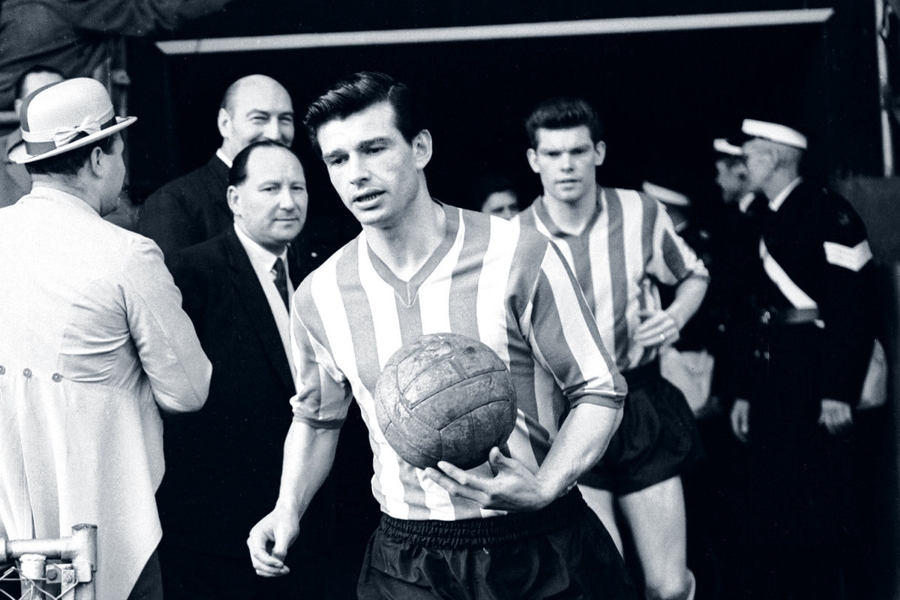
When Doug and I considered who should be the subject for our next chapter when we opened the Diary, we both agreed it had to be the review of the life of, the late, great, Stan Anderson. Doug recently attended the funeral of Stan, accompanied by some of the great past players of his era. Included in the list of mourners were: David Mills, Len Ashurst, who delivered the eulogy at Stan’s funeral, Bobby Moncur, Mike Horswill, Jim Montgomery, George Herd, Doug Weatherall, Brian Usher & Bobby Kerr.

Stan died at his home in Doncaster, on Sunday 10th June 2018 aged 84, following a week where he had been hospitalized with chest pains. He was always naturally fit and was still a keen golfer right up until this year when he became ill.

“Stan was just a gentleman and a magnificent player,” said his former team-mate and Sunderland club ambassador Jim Montgomery. “I never heard him say a bad word about anybody. He was one of the best players I ever played with and he left Sunderland far too early.”

He was an all-round sportsman and excelled at his golf. “He would complete rounds in 77 or 78 shots, which was under his age and quite remarkable,” noted Montgomery at the funeral.

Stan Anderson was born in Horden in County Durham on 27 February 1934 and has the unique distinction of being the only player to have captained the big three football teams of the North East; Sunderland, Newcastle and Middlesbrough.

He joined Sunderland in 1949 as an amateur, signing as a professional on his 17th birthday in 1951 and made his debut in October 1952 at Roker Park against Portsmouth. Stan scored the first of his 35 Sunderland goals against Newcastle who he eventually joined in 1963. The only Sunderland player to be capped by England during the 1960s, Stan had captained his country at under-23 level and won an England B cap. One of his two full England caps is on permanent display at the Stadium of Light.

He didn’t really want to leave Sunderland and go to Newcastle, but he knew that Joe Harvey the manager was desperate for him to sign.

He is quoted in the book ‘Match of My Life’, when he reflected on his 1963 departure for Newcastle United.

“I knew there’d be trouble if I switched stripes and I was from a family of dyed in the wool red and whites – playing for the team I supported was always a privilege and a pleasure for me.”

He added: “I never wanted to leave Sunderland, but eventually Browny [Manager Alan Brown] bombed me out.”

After captaining Newcastle to promotion, he completed his north-east hat-trick by playing for Middlesbrough as captain.

He succeeded Raich Carter as Middlesbrough manager in April 1966 and remained at the club before resigning early in 1973, to be replaced initially on a temporary basis by Harold Shepherdson and then permanently by Jack Charlton. In his time at the Boro, the club were relegated from and then subsequently promoted back to the Football League second division. After leaving Middlesbrough he managed in Greece for AEK Athens FC. Returning to England, he became boss at Queens Park Rangers, Doncaster Rovers and Bolton Wanderers where he managed a young Peter Reid, before leaving management after resigning in 1981. He also had a spell as assistant manager with Manchester City. He later finished his football career as a scout for various clubs including Newcastle.

Doug’s Eulogy to Stan Anderson

OFB: Doug made this note just after Stan had died and contacted me. This is what he wrote then:

The North-East has lost one its most significant figures. Only he captained the area’s three main clubs. And I have lost a friend.

My most poignant memory of him was the night of Sunderland’s first relegation from the top division. We had travelled by train to London from Portsmouth where Sunderland’s fate had been sealed. We stayed at the Kings Cross’s Great Northern Hotel. While some of us downed our sorrows there Stan had just wandered around the West End. When he eventually returned to the hotel he told me just how relegation had hit him. A Horden, County Durham, lad, and a Sunderland fan, it hurt him deeply. Yet he had seen the happy faces of West Ham United players and fans as they arrived back in London from the North-East, knowing their club would take their place in the top grade.

Stan Anderson - Sunderland 2 Stan Anderson grew up in house where his father supported Sunderland and his mother Newcastle and went on to captain both sides as well as Boro
Happily, I also shared Stan’s joy when, captaining Second Division Sunderland, he scored the two goals which beat First Division Arsenal in the FA Cup at Roker. He was the picture of joy, too, as he celebrated Newcastle’s promotion to the top grade by setting a new fashion – by flinging his shirt to joyous fans at St. James’.

While his Dad was a Sunderland fan, his Mum’s family club were the black-and-whites. The best tribute he was paid after he left Middlesbrough came from Jack Charlton, who replaced him as Middlesbrough boss. Big Jack said Stan had left him with a good squad of players. I hope Boro fans still appreciate his contribution to their club’s history.

Diary Extracts:

OFB: Did you know Stan from his early days?

DW: I was very much aware of him while he was still a schoolboy. Since I lived at Seaham, County Durham. I heard of this Horden Colliery lad who was showing class while playing for East Durham’s under-15s side. If my memory serves me right I saw him in action at Shotton Colliery Welfare and was impressed. He then progressed with distinction with Horden juniors before Sunderland signed him.

OFB: When did you first encounter Stan?

DW: As a Roker fan, I watched him play in Sunderland’s notable first team. He was a rarity: A North-East lad alongside costly members of the so-called Bank of England side.  He turned out with great names like Len Shackleton and Trevor Ford and didn’t look out of place.

OFB: Was he instantly recognizable as a footballer who was destined for greatness?

DW: He was always a quality passer with two good feet. He could defend reasonably, but he was mainly a creative wing-half. In that era of 2-3-5 formations he could dispatch fine cross-field passes to his left-winger. You don’t see a lot of that these days; more’s the pity!

OFB: Do you think that he tried to emulate his style of play, on any individual player who played in his position?

DW: As a Sunderland supporter himself, he knew the high value of those long, accurate passes. He’d seen Willie Watson and Arthur Wright deliver them from wing-half positions.

OFB: When did you first get to know him personally?

DW: I got to know him personally and as a pal in my early days as a sports reporter. Apart from interviewing him about current football affairs, we could chat about our days as schoolboy players. Remember I’d played for Sunderland and District Boys, my team-mates having included Jack Webb and Billy Beadnell who, like Stan, had joined the professional red-and-whites.

OFB: Did you have long chats with him about his football?

DW: Yes, we did. Whilst he knew I was a professional journalist, he knew I wanted him and, indeed, all the other North-East clubs to succeed.

OFB: What do you think was his most memorable game, his own individual performance as a player?

DW: He, of course, often shone, but his best performance I remember most was in an FA Cup third-round tie with First Division Arsenal in 1961. Sunderland were then in the second grade, but, the skipper Stan inspired his team as he scored both goals in in a deserved 2-1 win. His side were to make the quarter-finals before losing in a White Hart Lane replay to League and Cup double winners Tottenham, Spurs captain Danny Blanchflower having conceded that his truly great team had narrowly escaped losing at Roker Park.

Anderson with England Despite Stan’s obvious talent, he only managed two caps for England (pictured besides Bobby Moore) due to intense competition in his position
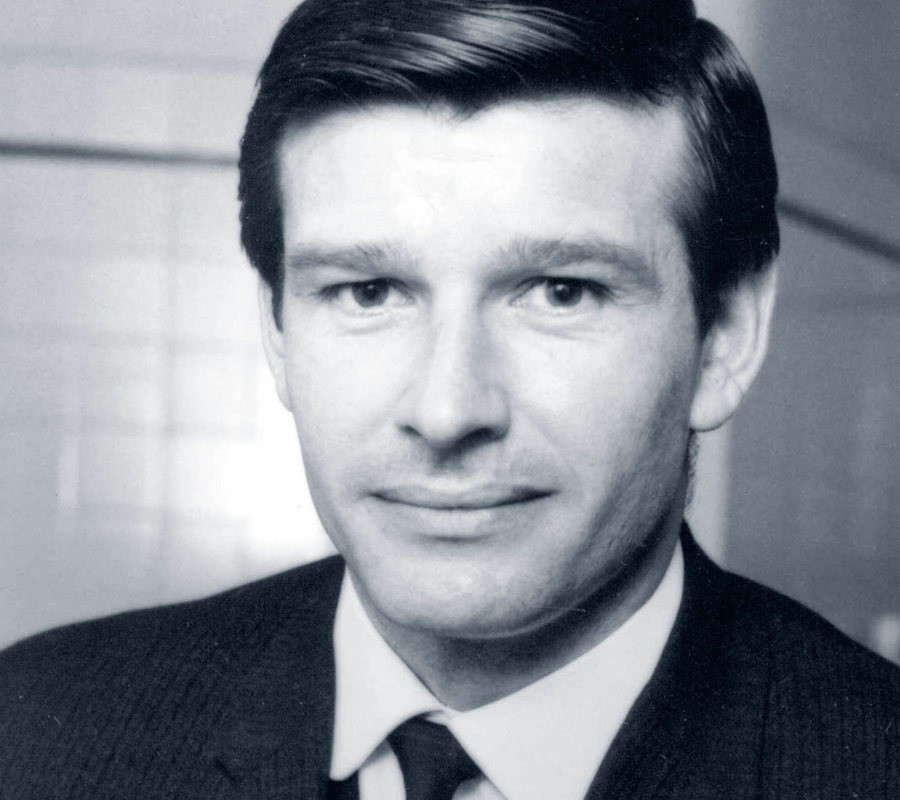
OFB: Did you see him play for England?

DW: I didn’t see either of his two appearances for the full England team, but I know the main reason he didn’t gain more caps. Competition for wing-half places was so intense. Remember skipper Billy Wright, of Wolves, was generally the automatic right-half choice for ages.

OFB: What was your best personal and most enjoyable experience watching him as a player?

DW: I was so pleased for him in that Cup success over Arsenal, but I was even more delighted for him when, as captain of Newcastle, he led them to promotion to the top grade as Division Two champions. His transfer from Sunderland had been controversial. The Roker manager, then preferring Northern Irishman Martin Harvey for the No. 4 shirt, had negotiated Stan’s transfer to Sunderland’s most intense rivals. Fans on both Wearside and Tyneside couldn’t believe it. Stan himself had thought he’d be around Roker much longer. Stan’s Mum was from a Newcastle-supporting family, so you can imagine her delight and that of the Geordie masses when promotion was sealed with victory over Bolton at St. James’. In the celebrations Stan and his colleagues were in the directors’ box. And Stan was the first to set a pattern for years to come. He was the first to take off his shirt and hurl it into the hordes on the pitch. I never saw him happier. The saddest I’d seen him was late at night in London after Sunderland had been relegated for the first time in their history even though they’d won at Portsmouth that day. While some of us had drowned sorrows in the Great Northern Hotel Stan had wandered around West London. To rub salt into his wounds, he’d seen West Ham and their jubilant fans arrive back at King’s Cross Station. They were celebrating promotion to the division Sunderland had been in for 65 years.

OFB: What was his worst game in your experience?

DW: His worst game for Sunderland was probably his last. That was a 3-3 draw with Cardiff at Roker. His direct opponent was the great Ivor Allchurch, who won their personal encounter hands down. Coincidentally, Stan’s Newcastle debut was against Cardiff and again Allchurch was the master.

OFB: Did you follow his managerial career after he retired as a player and were you still in contact with him?

DW: Of course, I reported his transfer from Newcastle to Boro and was in regular contact with him as, in my opinion, he did fine work for Boro, first as their captain and then as manager

OFB: Who was in your opinion the manager that had the greatest influence on his career and why?

DW: Stan was very much his own man, but he learned a lot from Manager Brown at Sunderland. How, for instance, to deal with players, and how NOT to deal with them.

OFB: Which opposing team and which player did he fear playing against?

DW: Mentioning Ivor Allchurch again would probably be the answer to that one!

OFB: Do you know who was his favourite player of all time and why?

DW: Not too sure, but since he’d seen Len Shackleton at his amazing best, Shack would be an obvious contender.

OFB: What do you remember about Stan the most?

DW: Apart from his fine creative ability, I recall his warmth and friendliness as a human being. I recall, too, his being a good judge of a player. Fans should remember that Jack Charlton was always grateful for the playing talent Stan bequeathed him. Remember Jack’s squad was the nearest to winning the League title.

OFB: A huge thank you Doug, for taking the time to open your Diary again, revealing this latest chapter to Diasboro and our readers.

Stan Anderson - crop Stan Anderson, born 27 February 1934 in Horden, County Durham – died 10 June 2018 in Doncaster aged 84
If you wish to leave a comment about this Doug’s Diaries article about Stan Anderson please return to the Week 10 discussion page