
| Middlesbrough | Wolves | ||
| Bamford | 90′ +4 | Costa Cavaleiro ▮ Neves ▮ Doherty |
58′ 37′ 56′ 71′ |
| Possession Shots On target Corners Fouls |
55% 17 3 6 10 |
Possession Shots On target Corners Fouls |
45% 7 6 2 13 |
Pack mentality frustrates Boro
This was the ultimate test for a resurgent Boro with the League Leaders arriving at the Riverside this evening to see if Boro could shake off the hoodoo of being unable to beat teams around them let alone one twenty points ahead of them! TP confirmed in his press conference that there were no injury concerns apart from Rudy Gestede so hopefully that meant Ayala was back to full fitness, Besic had come through his International travels without a recurrence of his earlier Hamstring problems and Paddy was fit and raring to go. The biggest selection dilemma for TP presumably was a straight choice between Grant or Clayts.
Wolves Manager Nuno Espirito Santo would likely be missing Diogo Jota with an ankle problem but that was his only fitness concern with danger man Afobe very much likely to start. Boro have an impressive record against Wolves stretching back to 1951 for the last time the visitors took away all three points from Teesside or two as it was back then. Wolves had never completed a double over Boro and depending on your perspective it would be unlikely that Wolves would break the habit of a lifetime or it was inevitable that tonight was the night that that record would be broken “Typical Boro” fashion with Wolves not losing back to back away games since March last year.
Boro’s team was as expected by many with Grant being recalled but surprisingly Howson left out so we had Clayts and Grant playing alongside Besic in a somewhat unadventurous looking Boro midfield that was to be totally bossed by Neves. The game started with both sides probing and testing their opponents but the wing backs from Wolves were opening up the game and stretching Boro’s backline and causing us problems. Shotton and Traore struggled to cope on the right whilst Friend and Downing had an easier time on the opposite flank with George having one of his better games in a while. In the first half Downing struggled to create anything of real merit whilst Traore seemed a little lost and confused at times apart from three cameo runs which highlighted both his value to the team and the futility of being unable to get him on the ball in dangerous places.
Boro started to gain a bit of control and started playing with some confidence but ironically just when we settled we were hit by a sucker punch clearance out and Grant took one for the team as he scythed into a challenge on Cavaleiro for which he was lucky to receive just a yellow. Despite that Boro still exerted their influence in the game although it has to be said it petered out in the final third due to a lack of a cutting edge pass, momentum, continuity, pace and bodies supporting Bamford who battled very well considering it was often 3 to 1 in the favour of those in gold.
Wolves took the lead against the run of play after some scrappy last ditch defending which had a hint of a hand ball in the build up to the goal but neither the Ref or his Assistant had the same view as the North Stand. Cavaleiro managed to get to a Randolph saved ball first and managing to keep it in play it fell to boo boy Douglas whose chipped effort was volleyed past Randolph by Costa. One-nil against the run of play or not it was a warning or it should have been but minutes later Wolves doubled their lead with an awkward ball floated in from a corner that forced another brilliant tipped save from Randolph but nobody in Red was covering the right hand post and a simple knock in from Cavaleiro was the price paid for our defence going awol.
Frustrating in the extreme at the manner in which we failed to clear our lines and also that we just couldn’t get Adama firing and Paddy supported at the other end. For all our “dominance” at that point which fate was tempted by choruses previously of “Top of the league you’re having a laugh” our persistent passing was a throwback to former times of windscreen wiper vintage. Half time came with a small amount of boo’s ringing round more out of that word “frustration” again than bile at the players efforts.
Thankfully the half time break would give Pulis the opportunity to shuffle his pack and inject some pace and drive centrally. To the surprise of most we came out with the same eleven lining up and almost instantly were on the back foot as Wolves looked to put the game to bed early on. Boro steadied themselves but couldn’t break open the men from Molineux. Things were becoming a bit feisty with a few choice challenges from Boro in the first half now being matched but the ante now upped from Wolves and Stuart Attwell started dishing out yellow cards to those in Gold in addition to the one he had issued in the first half to Ruddy for timewasting.
TP had switched Adama over to the left at half time to continue to keep him in earshot and as George continued his forays but now feeding Adama his magic drew the unwanted attention of Wolves as they entered a period of serial fouling and increasing their card count on the way. Paddy had a great chance set up by Adama that he worked well but slipped at the vital time when he was one on one with Ruddy. Adama had also slipped previously as questions were impolitely muttered around me about stud selection and pitch watering activity.
Most annoying on the night was that Boly looked like an accident waiting to happen and Ruddy was less than confident in his handling and distribution yet we never tested him, instead continuing to play this slow predictable passing retention game without any end product. Grant as great as he is and Clayts just didn’t possess the magic to match Neves and Stewy seems to getting worse with his decision making and shooting which was highlighted when he had the chance to pull things level in the dying seconds but again missed the big white target while earlier scooping a shot well over the crossbar by several feet.
As envious as our glances were towards Neves he managed to get himself booked for arguing with Attwell and then went flying into George in a ridiculous lunge which had the North Stand screaming for him to be sent off which was duly obliged when he received his second Yellow and then Red. Down to ten men Boro now surely would go for it and bombard Wolves to try and pull back the deficit. The sending off was controversial from an away perspective as seconds earlier George looked to have brought Costa down from behind when clean through on Randolph but Attwell had adjudged the fall to be theatrical or the coming together accidental which seemed very fortuitous to those in the South East Corner and therefore George had remained on the pitch.
George again was linking up well with Adama to have a terrifying effect on the ten men of Wolves and a high ball that looked to be going out for a Goal Kick was contested by George and Doherty who already booked looked to have led with an elbow to pick up another Yellow and Wolves second Red of the evening. By this time Wolves were now in total disarray, down to nine men yet Boro were still content to pass the ball around the edge of the box instead of driving shots at force from a distance looking to take advantage from ricochets’. No quick unlocking pass and play movements from Boro and despite having a two man advantage we still made hard work of it and tactically things weren’t improved by introducing Crainey for Shotton when the opposition had their backs to the wall.
Shotton had just picked up a Yellow and had been fortunate to avoid one earlier so there was some methodology behind the decision. Assombalonga had also been introduced and he battled well inside the box fending off defenders but the build up to him was slow predictable and ponderous and therefore easily read and defended against. Six minutes of added time seemed scant reward for the amount of stoppages and time wasting but Paddy managed to cleverly toe poke an effort in with two of the six minutes remaining to provide false hope, too little too late.
Wolves are not top of the League by luck and showed their unity, undoubted skills and understanding but three shots on target was a very poor return especially against nine men for a large chunk of the second half. Downing looks to have lost creativity out wide and slowed things down on too many occasions, Clayts and Grant likewise struggled to inject any va va voom and as a consequence we just ground things out by passing out wide or back centrally again when we needed a Ramirez to unlock the defence or in his absence some power pressing with pace and passing instead of slow Chess moves. Howson was brought on to try and remedy that one dimensional aspect but he had the touch of a baby elephant unfortunately and failed to make any impact.
Besic had been quiet in the first half but had a lot more influence on things in the second as did Adama who was also incidentally our best ball boy as he vaulted the advertising hoardings like a hurdler on several occasions to retrieve the ball. Randolph was great in goal and wasn’t to blame for either goal and indeed kept the scoreline down but MOM for me was George, whilst Adama caught the eye in the second 45 George was consistent for the full 90 minutes.
To end on a positive despite numerous sections of the ground emptying before the final whistle those remaining stayed loyal and gave a generous round of applause at the final whistle which despite the disappointments and frustrations echoed the wider sentiment of this still isn’t over and the fans are still believing that a Play Off place is there for the taking.
Boro hoping to have another
good Friday in front of the cameras
After a two-week break in proceedings so that Gareth Southgate’s England team can practice some essential phrases in Russian like “Sorry, I’ve never heard of Boris Johnson” and “No thanks, I don’t want a McMafia Unhappy Meal” – it’s time once again to stop pretending you’re remotely interested that some unknown Australian secretly stuck a yellow piece of plastic into some round piece of leather because he was so bored of standing around and wanted an early tea. Yes, football is back and it’s still winter even though the clocks are all wrong and the lambs are refusing to frolic until they see written proof that it’s officially spring.
Boro welcome table-topping Wolves to the Riverside, who continue to lead the promotion pack and show the hunger needed to properly smash the league. Tony Pulis will be hoping to uphold the unusual but good Friday agreement that they are normally allowed to win when they play in front of the cameras as they attempt to at least temporarily halt the team in orange from their inevitable march towards the Premier League. Though rather appropriately for Good Friday, the Holy Spirit will be present at the Riverside – but before Boro followers start to anticipate having a religious experience (other than the usual raptures in time added on) it should made clear that this unearthly presence is merely the Wolves manager, Nuno Espirito Santo, whose surname literally translates as ‘Holy Spirit’. Just to add to the Easter symbolism, the Wolves manager was also born on the Portuguese island of São Tomé, which translates as Saint Thomas, who was according to the famous book, the doubting disciple of Jesus after his resurrection following the crucifixion.
On the subject of doubters, Boro opened their season as the bookies promotion favourites with a visit to Molineux and suffered a narrow 1-0 defeat in game of few clear-cut chances as the teams shared possession. There was little to suggest back then that there would be the massive gulf in points accumulated by both teams and with just 8 games left to play Wolves are an unassailable 20 points ahead of Boro. The Defensive record of both teams is pretty similar but it is at the sharp end where Nuno Espirito Santo’s team have out-performed the Teessiders with 15 extra goals. Nevertheless, Boro have out-performed the leaders in that department during the last six games with an impressive 14 goals to their 12 – which has left many wondering what might have been this season. For all the talk of Wolves having an unfair advantage over other clubs in the league, Boro can’t really point their finger, as let’s face it, the club squandered their massive budgetary advantage on too many attacking players that just weren’t fit for purpose. It may prove to be the most costly of mistakes if Boro miss out this season but the team have scored three goals in their last three Riverside outings and Wolves may still be mindful that their last trip away to Villa ended in a 4-1 defeat.
| Middlesbrough | Wolves | ||
| Tony Pulis | Nuno Espirito Santo | ||
| P38 – W18 – D8 – L12 – F54 – A36 | P38 – W25 – D7 – L6 – F69 – A33 | ||
| Position Points Points per game Projected points |
6th 62 1.6 75 |
Position Points Points per game Projected points |
1st 82 2.2 99 |
| Last 6 Games Brentford (A) Barnsley (H) Birmingham (A) Leeds (H) Sunderland (A) Hull (H) |
F-T (H-T) 1:1 (1:1) D 3:1 (2:0) W 1:0 (1:0) W 3:0 (2:0) W 3:3 (0:1) D 3:1 (2:1) W |
Last 6 Games Burton (H) Reading (H) Aston Villa (A) Leeds (A) Fulham (A) Norwich (H) |
F-T (H-T) 3:1 (2:1) W 3:0 (1:0) W 1:4 (1:1) L 3:0 (2:0) W 0:2 (0:1) L 2:2 (2:1) D |
The big bad Wolves have been facing howls of protest from some quarters, mainly in West Yorkshire area, over claims that they’ve blown the house down when it comes to fair competition. Following their 3-0 home defeat to the leaders at the beginning of March, Leeds owner Andrea Radrizzani sent a frustrated post-match Donald-style Tweet that questioned the legality of the link-up between Wolves and so-called super-agent Jorge Mendes. He complained: “Not legal and fair to let one team owned by a fund whom has shares in the biggest players’ agency with evident benefits (top European clubs giving players with options to buy… why the other 23 teams can’t have the same treatment?)”.
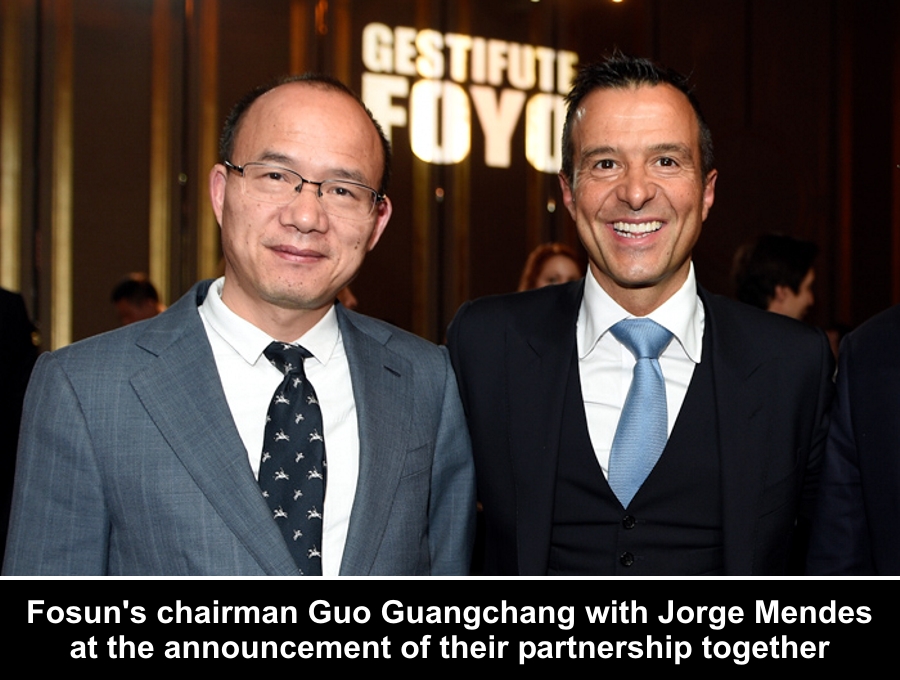
The Leeds owner has not been alone in raising the issue of the complex arrangement between the Wolves owners, Jorge Mendes, their manager and some of the players. In the summer of 2016, Chinese investment group Fosun International acquired Wolves via a British Virgin Islands-registered holding company for an estimated £45m, with Fosun’s chairman Guo Guangchang having an estimated personal fortune of over $6bn. It was reported in The Independent newspaper that a few months earlier Mendes had sold a 20 per cent stake in his world-famous Gestifute agency, through which he operates, to a company called Foyo Culture and Entertainment – which is in fact a subsidiary of Fosun and this deal was announced as part of a major partnership between Mendes and Fosun.
After Wolves was acquired, Mendes was brought in as an “adviser on transfer dealings” and the subsequent view on the deal by the FA was that the formal ties between Fosun and Gestifute were considered to be so minor that they were not enough to represent a ‘conflict of interest’ under their rules. Incidentally, those FA regulations in the section relating to conflicts of interest state that intermediary organisations “shall not have an interest in a club”, and that a club “shall not have any interest in the business or affairs of an intermediary’s organisation.” – so hard to make much sense of that ruling.
In addition, current Wolves head coach Nuno Espirito Santo has been represented by Mendes for over 20 years since his playing days, as too were many of the players signed, including £15.8m record signing Ruben Neves and on-loan Atletico Madrid forward Diogo Jota. David Conn wrote in the Guardian about the transfer dealings last season after the takeover by Fosun that Mendes influence was clearly evident in some of those signings, including a then club record £7m paid to Monaco, for the Portugal midfielder Ivan Cavaleiro. He also observed that the FA now publish an annual list of ‘intermediaries’ involved in transfer deals and it stated Carlos Osório de Castro, a lawyer based in Portugal acted for the player, with Valdir Cardoso, a Portuguese agent understood to work for Gestifute, representing the club. In January, Wolves then paid Monaco £13m for the Portuguese midfield player Helder Costa, which listed the same two intermediaries Osório de Castro and Costa on the deal.
David Conn added that Carlos Osório de Castro is believed to have acted as Gestifute’s lawyer for many years, though the Guardian were told by them that they don’t comment on business undertaken for their clients. The subsequent arrival of fellow Portuguese player, João Teixeira was listed as having no agent but Wolves had Andy Quinn, a director of Gestifute International based in Ireland, acting for them. However, the Portuguese defender Silvio, who signed from Atlético Madrid, was not listed in the FA document so the agents on that deal have not been publicly disclosed. In all 12 players were brought in 2016-17 and Wolves finished in 15th place under Paul Lambert, who subsequently left the club. Wolves stated that they only paid £1.25m in agents fees last season and that was below the average. They also claimed Mendes was an adviser to the owners, in the same way as many other agents and influential figures within football are – the club have signed players within his portfolio as well as players from other intermediaries.
Of course there is a danger that people can get drawn into the hype that if you want to be successful then you need to enlist the services of the likes of Jorge Mendes. Perhaps the Leeds United owner was simply trying to deflect criticism from his club’s own short-comings, which have seen Leeds season take a nose-dive after looking like possible promotion contenders. Granted Wolves may have some good players that are only at the club thanks to their spending power and contacts to Mendes, but let’s not build them up into some kind of ‘Invincibles’. Having good players is certainly not a hindrance, but they got where they are by also playing as a team and forming a winning mentality – this is also the task of Tony Pulis and he has 8 games left to prove Boro can have a shot at the play-offs. After that it will be down to who performs on the day and Boro’s cause will be greatly improved if they manage to see off the current leaders to continue the recent momentum with their six-game unbeaten run.
So will Boro silence the doubting Thomases who are still unsure that their season has been resurrected by new saviour Tony Pulis? Or will the presence of the ‘Espirito Santo’ and his team of actual league smashers prove to be a heavy cross to bear as Boro are left feeling stigmatised by their own failure? As usual your predictions on score, scorers and team selection – plus will Boro continue their three-game record of scoring three goals at the Riverside?
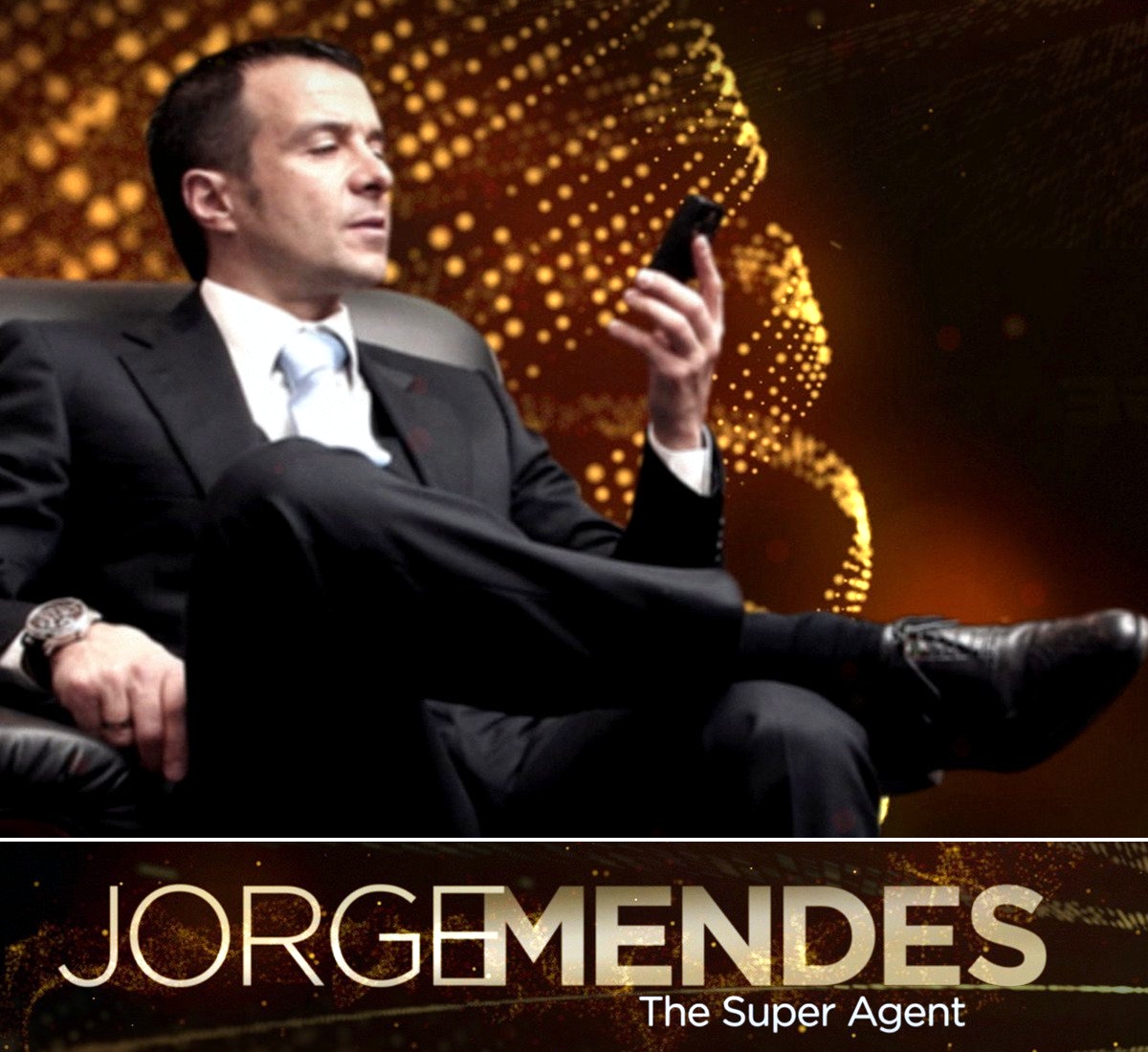
So who is Jorge Mendes?
Mendes was a budding professional footballer who had to abandon his dream in his early twenties after being rejected by several Portuguese clubs. He was looking for a new career and after the less than glamorous job of running a video rental shop, tried his hand at being a DJ before opening a nightclub in the small town of Caminha on the north-west border of Portugal, which was famous for hosting one of the country’s oldest rock festivals. Then in 1996 Mendes apparently had a chance meeting at a bar in the historic town of Guimarães with a goalkeeper who played for the local club Vitória and he agreed to let Mendes become his agent.
That player was none other than current Wolves manager Nuno Espírito Santo and Mendes brokered his first deal in football as Nuno joined Spanish side Deportivo de La Coruña on a five-year contract, although he only actually made 4 appearances and spent much of his time out on loan. Incidentally, the town of Guimarães where they met was known as the birthplace of the Portuguese nationality as it is believed that Portugal’s first King, Afonso Henriques, was born there in the beginning of the 12th century – rather appropriate for a man who was to become king of all agents.
Perhaps the key to Mendes success was that he quite early made the decision to target young promising players and has been hailed as someone with a brilliant eye for talented players, who scouts players and is quick to sign up those who catch his eye. He was a frequent visitor to the soccer schools and youth teams and spotted a young Cristiano Ronaldo and quickly signed him up. Mendes also reportedly learned the importance of being straight-forward and loyal to his clients when he witnessed the fall of the number one agent in Portugal, Jose Veiga, who’s influence waned after he fell out with Porto over the sale of midfielder Sergio Conceicao to Lazio, leaving him out in the cold with the most lucrative Portuguese club to do business with.
The decline of Veiga left Mendes as the go-to agent in Portugal and seemingly nobody left the country without Mendes having a hand in the deal. Mendes’s first major international deal was Hugo Viana’s move from Sporting Lisbon to Newcastle for around £8.5m in 2002 and a year later he brokered the £12m move of the teenage Ronaldo to Man Utd. His next big deal came in 2004, when he stepped in and negotiated José Mourinho’s move from Porto to manage Chelsea – Mourinho’s agent had lined up a move Liverpool but Mendes cut a deal with the Israeli super-agent Pini Zahavi, who was acting for Chelsea to try and bring the Special One to Stamford Bridge instead. This deal established Mendes’s importance and every Portuguese player that followed Mourinho to Chelsea became a client of Mendes – including Ricardo Carvalho, Paulo Ferreira, Tiago and Maniche. with Mendes being paid by Chelsea to act for the player and for the club.
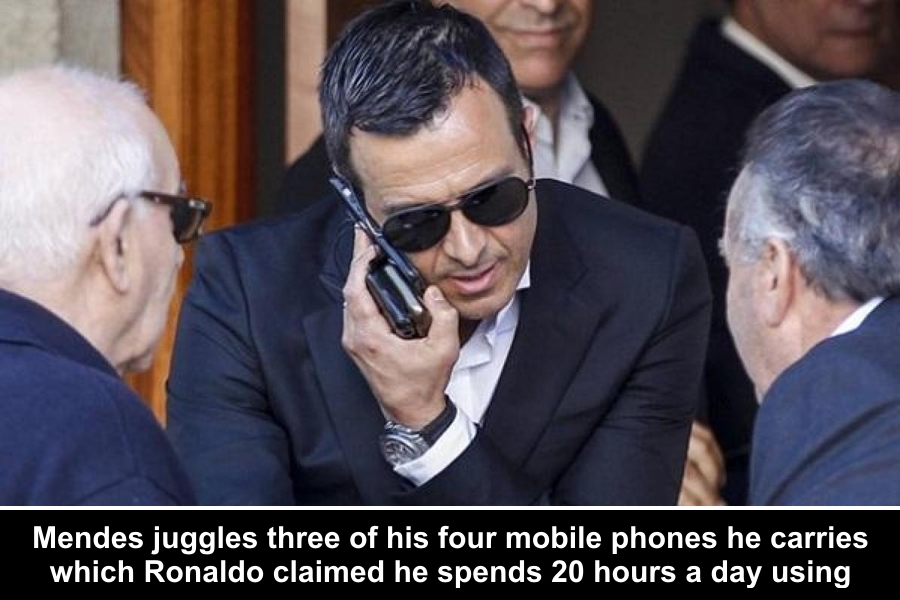
Those who are represented by Mendes argue that he offers a very personalised service and goes that extra mile to take care of their needs – though no doubt what they are also getting is his leverage in being able to squeeze out the maximum return on deals. When Mourinho left Chelsea for Inter Milan in 2008 it made him the highest paid coach in the world and his subsequent move to Real Madrid netted Jose a four-year contract worth £40m. Mendes also secured the deal that saw Scolari to move to Chelsea on a three-year contract worth around £6m – which was also rewarded by Scolari by allowing Mendes privileged access to the Portugal national team’s hotel during the Euro 2008 tournament so he could plot his players next moves.
In 2009, Mendes handled the £80m record transfer of Cristiano Ronaldo from Man Utd to Real Madrid and then in 2011 brokered three deals to Monaco worth £120m for James Rodríguez, Falcao and Moutinho. Mendes then ‘earned’ himself around £30m in 2014 when he saw through four big money deals for James Rodríguez again who went to Real Madrid, Ángel Di María who left Madrid for Man Utd, Diego Costa from Atlético Madrid to Chelsea and Porto defender Mangala who joined Man City. The figures involved in those 8 deals add up to around £400m and those are just but a few – in addition, it’s been assessed that Mendes was responsible for nearly 70 per cent of all players transferred from Portugal over a ten year period between 2001-2010 with deals from the big three of Porto, Benfica and Sporting Lisbon amounting to nearly €550m alone.
It seems if you want to get ahead then it helps to have Jorge Mendes behind you and it’s probably no coincidence that England has seen a recent influx of Portuguese managers with contacts to the super-agent. Marco Silva, who recently managed both Hull and Watford is represented by Mendes, with fellow Portuguese manager Carlos Carvalhal also enlisting the help of Mendes in the January transfer window to bolster his squad, though despite agreeing fees for some Mendes’s clients it appears the players themselves weren’t too keen on joining the relegation threatened club.
Third-Party Ownership
Getting paid for doing transfers was just one aspect of the business but Mendes had set up a company, GestiFute, that was also involved in part-owning the economic rights of many of his players. The name GestiFute is the short version of Gestão de Carreiras de Profissionais Desportivos, which translates as Management of Careers of Professional Sportsman – and basically did what it says on the tin. Though when we talk about ‘economic rights’ we essentially mean third-party ownership and although the FA made this illegal in 2008 following the less than transparent ownership that surrounded the Tevez and Mascherano deals to West Ham, though it was still allowed by the Portuguese Football Association, as well as in South America and some other countries.
GestiFute was also involved in part-owning the economic rights of a number of their players and part of these were sometimes sold on. For example, Porto bought 20 per cent of Brazilian-born Portuguese professional footballer Deco’s rights from GestiFute in exchange for €2.25m million, plus 5 per cent of the economic rights for Ricardo Carvalho, 10 per cent of Benni McCarthy’s rights and then a further 15 per cent of Deco’s economic rights €1.25m. It meant that Mendes could generate cash from his players without even selling them, which is especially useful if clubs had players that were on long contracts.
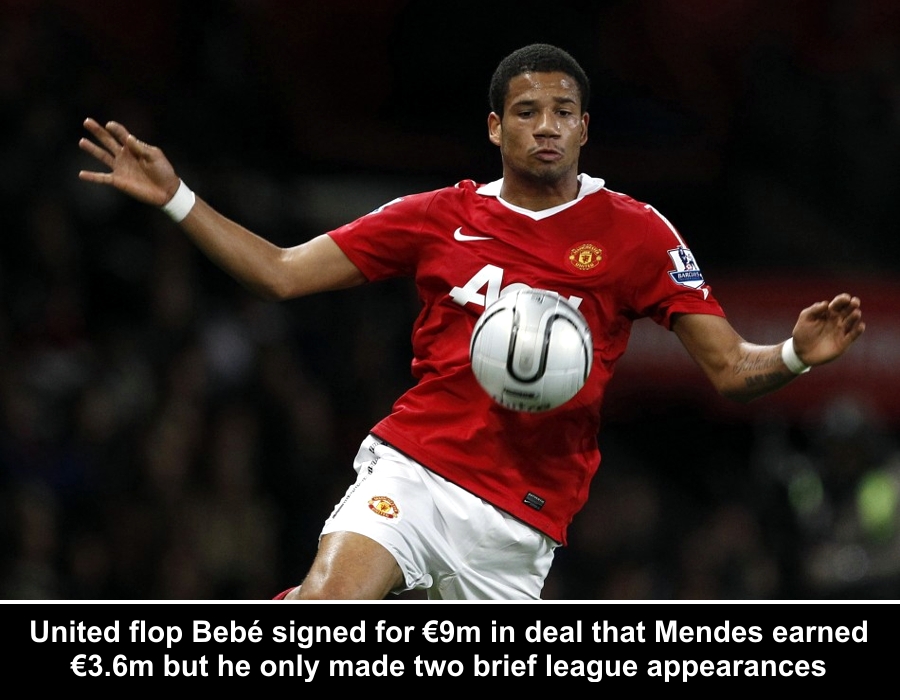
In addition, Mendes also bought the economic rights off his clients too and this proved particularly lucrative in the case of Bebé in a move to Man Utd Mendes received in addition to his nearly €1m agent’s fee, €2.7m from the €9m deal as part of the economic rights. Again, David Conn had also investigated this deal and discovered Bebé was playing in the Portugues third tier until his agent got him a free transfer move to Primeira Liga club Vitória de Guimarães. Before the season has even began, Bebé sacked his agent and joined Mendes, who also puchased 30 per cent of his economic rights for just €100,000 and reportedly inserted a €9m release clause in his contract.
Stories appeared in the Spanish press that Mourinho was keen on buying Bebé, which then apparently forced Ferguson into a quick decision to buy – just two days after Bebé had joined Mendes. In fact Bebé only actually made two league appearances for Man Utd before being sent out on loan and Alex Ferguson admitted he had never seen him play but reportedly bought him on the recommendation of his former Portuguese assistant Carlos Queiroz, who was also a client of Mendes and at that time was coach of the Portugal national team. Incidentally, Queiroz’s relationship with United had been important in the transfers of Anderson and Nani in 2007. Indeed, unspecified aspects of the deal were investigated by the Lisbon anti-corruption unit but ultimately nothing ever came from it.
Nevertheless, third-party ownership allows investors to receive part or all of the financial rights owed to the player from transfer fees or contract negotiation fees. These investors can be anyone from a football agent, company or even hedge-fund. We’ve seen in the past that clubs often don’t receive the lion’s share of big transfers as others get their slice of the action. The concept was often used in countries like Brazil and Argentina to encourage investors to pay for the training and accommodation of young players on the promise of getting a return in future transfer deals. However the problem then becomes that players are moved around or parked until their value increases so that the ‘investors’ get a bigger return on their investment and often the player becomes just a commodity, who is encouraged move around and doesn’t personally financially benefit from the moves.
Our man David Conn also did an investigative piece in 2014 for the Guardian on plans by Mendes and Peter Kenyon to raise €85m to buy stakes in footballers via a Gibraltar tax haven for a fund registered in the tax haven of Jersey. The Guardian were shown a prospectus in which Mendes’s Gestifute agency and Kenyon’s company, Opto, are described as advisers to the fund, helping to identify players and make “partnerships” with “development clubs” in Spain and Portugal, and using their “relationships” with clubs in the “Big 10”. All sounds none specific, but it suggests the fund will do substantial business with them, buying stakes in players who will then be sold on, at a substantial profit to the investors. The plan is for the fund to advance the money to an Irish-registered company, which will buy the stakes in players.
The document says of Mendes and Kenyon that they have “developed many relationships throughout the football community. By leveraging these relationships, Peter Kenyon and Jorge Mendes have demonstrated a proven track record in brokering football Transfers” – Conn was unsure what ‘leveraging’ meant but it seemed to imply they would be able exert some kind of influence on which players were bought and sold. In addition, the article claims the document lists four other funds investing in third-party ownership of players which it says Kenyon and Mendes have advised – the Guardian claimed these were Jersey-listed partnerships and that Chelsea strongly appear to be involved in one of these funds. The document also claimed that Mendes may act as the player’s agent and may be remunerated independently in that capacity.
Conn argued that was likely in breach of FIFA regulations on agents, which stated: “Players’ agents shall avoid all conflicts of interest in the course of their activity.” and that FIFA “…imposes an obligation on clubs not to pay any part of a transfer fee to a player’s agent, and specifically prohibits the agent “owning any interest in any transfer compensation or future transfer value of a player”. The Guardian raised their concerns with FIFA but a spokeswoman only said: “We cannot provide comments based on a hypothetical situation. The disciplinary committee decides on a matter after analysis of all the specific circumstances pertaining to a case.” David Conn noted that FIFA has never brought any proceedings against any club or person in relation to third-party ownership funds.
In May 2015, FIFA banned third-party ownership, and specifically prohibited either clubs or players from entering into economic rights agreements with third-party investors. The European Parliament also announced a similar ban in sports, after raising concerns over the integrity of competitions as there was a risk players could be encouraged into criminal activities such as match fixing by unscrupulous third-party owners.
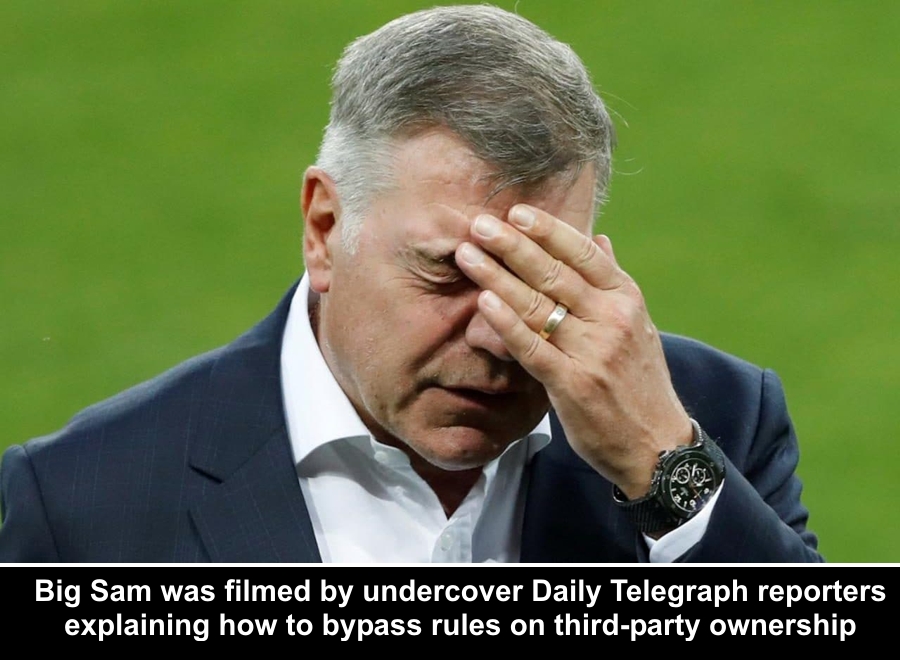
So is this the end of investors and third-party ownership? You would think so, but cast your mind back to England’s most successful manager (on paper) with a 100 per cent record. Yes, Big Sam Allardyce, who after one game and one win was shown the door by the FA after he was caught on camera by undercover reporters boasting to a bogus Far East business consortium how they could circumvent FA rules which prohibit third parties “owning” players. Over the course of two meetings Allardyce told the fictitious businessmen that it was “not a problem” to bypass the rules introduced by his employers. Big Sam added he knew of certain agents who were “doing it all the time” and claimed “You can still get around it. I mean obviously the big money’s here.”
So is it common knowledge in the game that players are still owned by third-parties? Perhaps the regulators are just not able to follow the money in a world where clubs, agents and players are often paid and operate through offshore holding companies – though like most things finding the proof is another matter and anyone making unsubstantiated claims will no doubt receive a letter from the expensive lawyers acting on behalf of their clients. It seems from what has happened in the past there is little will on behalf of the various footballing regulators, or perhaps even expertise, to investigate such matters.
An Agent for Owners too?
As well as representing an ever-growing list of the best players and top managers, Mendes has been also been involved in finding new super-rich owners for clubs too. In 2014, Mendes was instrumental in the takeover by Singapore businessman Peter Lim of a Valencia club struggling with €350m debts. Lim was the son of a fishmonger who grew up in a cramped two-bedroom apartment with six siblings, who went on to study accountancy at the University of Western Australia. He made his money after investing in an Indonesian Palm Oil start-up company that he eventually ended up taking over with a $10m loan before selling his stake for a staggering $1.5bn after the demand for palm oil in US food products rocketed. Lim had previously tried to buy Liverpool but failed and his preference was to invest in English football but was brought instead to Valencia by Mendes.
Mendes then brought in his old client Nuno Espirito Santo as manager, which had apparently been a condition of the takeover and the club were soon signing players from Mendes’s portfolio. Interestingly, Lim also acquired the image rights for Cristiano Ronaldo and then bought a 50 per cent stake in Salford City, which is co-owned by Giggs, Scholes, Butt and the Neville brothers. After a poor start to the 2015-16 season Nuno was dismissed and Lim’s co-owner of Salford, Gary Neville, was surprisingly installed as manager but was sacked just four months later after recording the lowest ever number of wins for a Valencia manager with 3 from 16 games. Valencia under Lim initially struggled and even flirted with relegation amid rumours that the new owner wished to sell the club – though six managers appointed in a little over two years with unrest behind the scenes can’t have helped the club.
It was claimed in Spanish newspaper El Pais that it used to be that “shambolic Valencia were regarded by some as a clearing house for players on the books of agent Jorge Mendes” – with one journalist, Aitor Lagunas, who writes for a Spanish football magazine saying “Valencia was seen as one of the showrooms for Jorge Mendes in European football. The way of Valencia used to be accept any kind of player with a Jorge Mendes profile.” He added that last summer was the other way around with new manager Marcelino sending the club’s owner Peter Lim to PSG and telling him: “Don’t come back without Goncalo Guedes. From all the players of Jorge Mendes, I want him.” And that is what happened – Guedes has been regarded by many as the player of the season in Spain and now Valencia are currently in fourth place, just one point behind Real Madrid.
Mendes also has had a long-standing influence at Monaco, where one of his clients the Portuguese coach Leonardo Jardim has been the manager since 2014. Monaco were taken over by Russian billionaire Dmitry Rybolovlev in late 2011, who appointed Jose Mourinho’s former technical scout at Real Madrid, Luis Campos, as Sporting Director in 2013. Campos was also a client of Mendes and it was he who appointed Jardim and Monaco were soon signing players from Mendes’s portfolio too – including James Rodríguez, Falcao and Moutinho. Another club where Mendes has influence is Zenit St Petersburg through his relationship with another Russian, Suleiman Kerimov, who was a major stakeholder in Gazprom, which bought Zenit in 2005 and both had good links with Roman Abramovich at Chelsea. In 2014, one of Mendes’s clients and a Mourinho former technical scout at Chelsea, Andre Villas-Boas, was installed as manager at Zenit – with more players from his Gestifute agency soon following such as Bruno Alves.
Opening Doors
Clearly Mendes now has influence at many clubs and he has many of his clients either operating as managers or directors of football, who are subsequently signing players from the portfolio of his Gestifute agency. Indeed, he now even has business links with the billionaire owners of some clubs, with Wolves being the obvious example who are quite open in having invested in his agency. When an individual is involved all the way down the chain from owner, manager and player you would think that the footballing regulators would see that as a conflict of interest but they seemingly have little interest in pursuing the matter. It’s quite possible that Mendes may in the future or already has been involved in a deal where both clubs and both managers, along with the player are all his clients. In such a case, what is the point in any of them being represented by someone who is supposed to act in the best interests of them as a client?
Perhaps it’s a case of nobody complaining because in the end everybody wins, one club gets the player they sought, the manager strengthens his team and the player gets a good contract – the other side offload a player and get paid a good return. Even when Mel Stein, chairman of the Association of Football Agents in England, who argued that agents can represent a player and be a broker in his transfer if efforts are made to avoid a conflict, he also declared “What is not acceptable is seeking to earn money from both ends of a transfer without ensuring that there is no conflict” – though Just how you can ensure there is no conflict of interest in such deals is hard to imagine. Of course the main winner is probably the man in the middle who gets another slice of the action for simply moving one of his assets from one of his clients to another and often banks a seven figure sum for ‘brokering’ the deal. In the end it’s not clear who is representing who – do the ‘clients’ represent the agency or does the agent still represent his clients?
The other issue that the Leeds owner alluded to was that it was not a level playing field because Wolves had access to an agency that controlled some of the top players at bigger clubs that were perhaps available at ‘mates rates’ and were out of reach for clubs who were not in the exclusive circle. It’s perhaps possible that if such agencies control a large group of players then for others to gain access to them may depend on accepting conditions dictated on the terms of these powerful operators. We shouldn’t forget that Steve Gibson also forged a relationship with Peter Kenyon in 2013 and gave the reason that “I’ve known Peter for almost 20 years… It’s of huge benefit that everyone in football takes Peter Kenyon’s call.” before adding “His contact book is extensive and he has given us a route to the most powerful agent in world football in Jorge Mendes”.
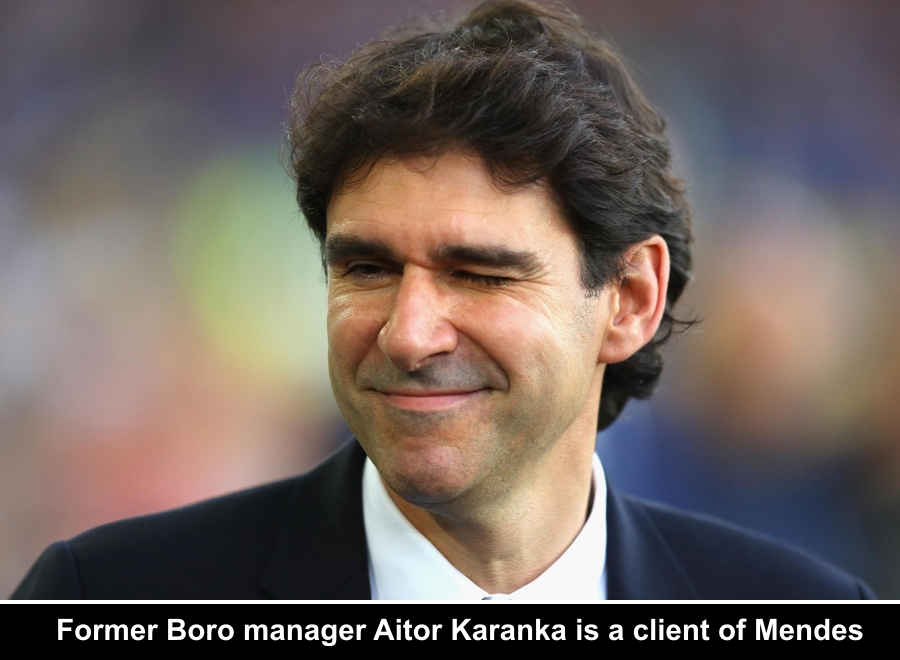
It was through those contacts that Boro appointed Aitor Karanka, who was one of Mendes’s clients and Gibson also announced “We’ve got two Academy teams in Madrid as we speak and we’ve built up other links that we’re not able to announce. We see ourselves being part of a three or four-club group that will help each other.” There has been little to suggest Boro’s relationship with Mendes proved to be of major benefit in terms of transfer deals and perhaps the most notable deal signed from his portfolio was goalkeeper Victor Valdes. Negredo was a player who arrived from Valencia, where Mendes had a strong influence, but was not represented by him and had subsequently fallen out of favour at the Spanish club after questioning Nuno’s tactics – his £28m signing from Man City was triggered before Mendes’s time and the club were keen to offload his hefty wage packet.
Perhaps Boro are not big enough fish for the likes of Mendes who seems more keen on keeping company with the billionaires of Asia and Russia, along with their deep-pocketed clubs. Having asked Peter Kenyon as a “very successful man” to give his “outsider’s view” and “come and look at everything and say where he thought we could improve”, Gibson seems to have now asked a similar question of Tony Pulis, who will no doubt have given his no-nonsense opinion on what Boro need to do if they want to compete in a football world where money now talks in much louder numbers than Steve Gibson’s northern dulcet tones.
Money is Power
In conclusion, Jorge Mendes has been at the centre of many of the big money deals in football for over 15 years and has an ever-growing list of clients that either own, manage, sanction transfers or play for some of the biggest clubs in Europe. Football has long since become a big-money industry where transfer deals are now being measured in the hundred million pound bracket and new owners and investors are frequently billionaires. Indeed, many of those involved in football ownership often appear to let their hearts rule their heads and regularly make poor, sometimes foolish decisions in the fear of missing out or possibly let their vanity get the better of them. It’s probably easy to exploit such people and it may be no surprise that FIFA have not shown much interest in ensuring that everything is seen to operate as transparently as we may expect, after all their record in matters such as integrity is not exactly setting an example.
We’ve also seen in recent years that those who regulate the game are also busy trying to extract large amounts of cash from very rich people – The Football League have themselves been courting the same billionaires businessmen of Asia in search of investors, such as Mr Caraboa and the subsequent bizarre EFL Cup draws aimed at courting rich Asian businessmen. The FA have also deemed that billionaire owners of clubs, such as Wolves, have no conflict of interest by investing in a football agency that controls the players they are buying. Even the PFA Chief Executive, Gordon Taylor, awarded himself a £2.2m pay rise last year to reflect the belief that you’re nobody in football unless you can demonstrate your credentials through the size of your wedge. Football is probably just a more public face of what is happening in the wider world of business – very rich and powerful people now control all aspects of our lives with governments and regulators appearing either unable or unwilling to intervene.
Mendes is probably just the equivalent of a multinational company like Google or Facebook, which gradually become more powerful by giving everyone what they want until eventually they control a huge chunk of the market. So we shouldn’t be surprised that men like Jorge Mendes exist, it’s just the inevitable consequence of a super-heated market that only has light-touch regulation where ultimately the powerful just become richer and more powerful as they operate on the edge of the rules. Mendes may even be a nice guy, as many of his clients profess, who is just able to do things better than others in the same way Mark Zuckerberg apparently is. The problems come when others start to see opportunities to go a step too far as we have seen with Cambridge Analytica – by which time it’s too late for the regulators as the consequences have already happened.
Anglo-Portuguese relations: the story
of the oldest alliance in the world
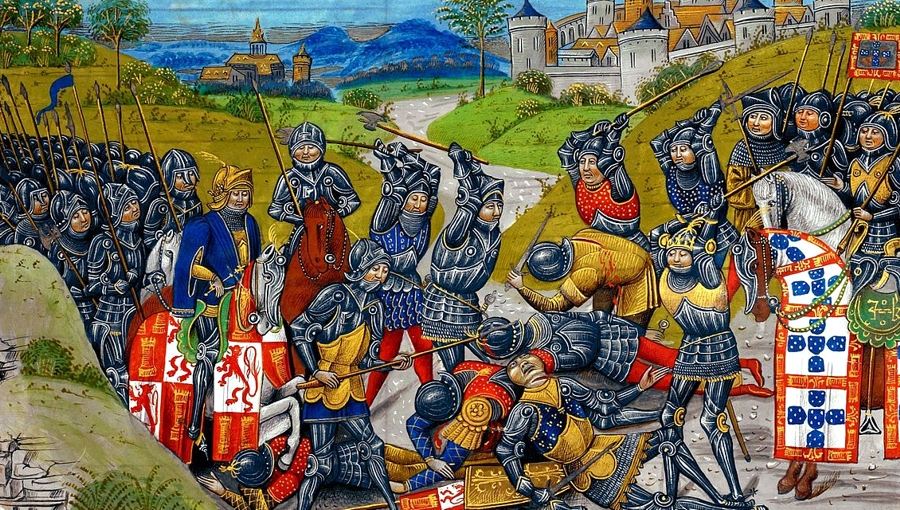
As an added bonus this week after some tangential research – here is a short historical meandering look at how the start of Anglo-Portuguese relations helped to ensure that Portugal is not just a region of Spain and whether there are any tenuous parallels to be scribbled between that and the UK’s exit from the European Union.
While you’ve already heard that the surname of Nuno Espirito Santa translates as ‘Holy Spirit’, his first name Nuno is quite a popular name given to boys in Portugal as it is likely derived from the important historical figure of General Nuno Álvares Pereira, who played a pivotal role in the country’s history. General Nuno was instrumental in seeing off the Kingdom of Castile (the precursor to what is now Spain) who invaded in 1385 during the battle between the rival camps for the contested Portuguese throne. It was a struggle that divided a country between those who wanted to join the wider alliance of an Iberian Kingdom and those who wanted to remain an independent country – unfortunately there were no referendums back then and sword was mightier than the pen when it came to making decisions.
The Portuguese struggle for independence is a somewhat complicated story that almost makes Brexit sound civilised. It involved a battle between the southern regions who wanted to remain independent of Castile and those to the north that sought to have Portugal annexed into a greater Iberian power. The situation arose after King Fernando heard the drums calling him to leave this mortal coil and left Portugal without a male heir – he’d earlier married off his only daughter Beatrice to King John I of Castile, which was viewed as an attempt to make Portugal a protectorate and deter the English from invading the Iberian peninsula. However, the prospect of being swallowed up into a greater Castile lead to an uprising in Lisbon, who backed Fernando’s step-brother John for the throne instead.
To add to the confusion both pretenders to the throne were called John – John, Duke of Valencia (who we are also confusingly told should not be confused with John of Castile, Lord of Valencia) and Fernando’s step-brother John, Great Master of Aviz (not an early horse rental organisation but a monastic military order that emulated the Knights Templar). Aviz John was the great hope for those who wanted to remain independent and is often referred to in Portugal as ‘the Good’, ‘the Great’ or even by the rather unforgettable catchy title ‘of Happy Memory’ – though to add balance he’s sometimes also referred to as ‘the Bastard’ instead, especially in Spain. I suspect that latter title is where similarities with Nigel Farage end, who I presume has been called far worse both in Europe and the UK, but nevertheless John was someone who was definitely in the ‘We want our country back’ tradition.
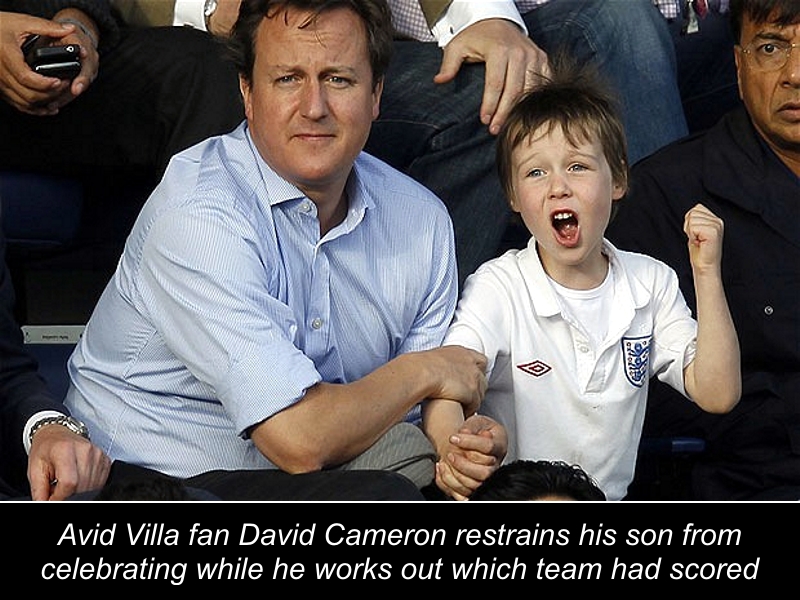
The story took another twist with the arrival of another John – this time it was John of Gaunt, Duke of Lancaster and father of the future King Henry IV – who landed in Galicia to stake his claim to crown of Castile (his second wife Constance was heir apparent) with help from Portugual but failed to get the backing of Castilian nobility and instead returned to England after being paid off by a rival claimant. Although he did leave his daughter behind, not in the absent-minded David Cameron sense after a decent Sunday lunchtime session, but in order to seal the Anglo-Portuguese alliance with a marriage to the newly crowned John I of Portugal and the Algarve (who was formerly known as the Great Master of Aviz).
It’s probably worth noting that John of Gaunt (or Ghent as it’s now known) is perhaps responsible for many of the Royal houses in Europe through the descendants of his children. Although he was the third son of the Plantagenet King Edward III and never became king himself his children led to the three houses of Lancaster, York and Tudor and all subsequent monarchs of England since 1603. In addition his daughter Catherine married into the Castile Royal House, from which all monarchs of Castile and Spain are descended, plus all subsequent monarchs of Portugal are descended through his daughter Philippa – in addition, so too is the House of Habsburg descended from his children.
This union between John of Gaunt’s daughter and King John I spawned a generation of highly educated princes known as the “Illustrious Generation”, who led Portugal into its golden era of great explorers and the ‘Age of Discovery’ as the lands from Africa, South America, India and China were successfully navigated by a succession of great sailors such as Vasco da Gama who circumnavigated Africa and reached India. Incidentally, this Anglo-Portuguese Alliance that was ratified as the Treaty of Windsor in 1386 is the oldest alliance in the World and still exists today with neither country ever fighting on opposing sides – even when Portugal was absorbed into the Iberian Union in the late 16th century many of the deposed Portuguese Royal House fought with the UK in the Anglo-Spanish war.
Although, it’s mainly thanks to Nuno Álvares Pereira that Portugal remains a separate country and is not just a western province of Spain – for his efforts, Nuno was bestowed many titles and had great wealth but went on to build numerous churches and monasteries before giving his wealth away and joining the Carmelite order of monks following the death of his wife. He actually died on Easter Sunday in 1431 and was later beatified in 1918 by Pope Benedict XV.
Whether any parallels can be drawn between the quest for Portuguese independence and Brexit is another matter entirely. Whilst Lisbon survived a siege early in the conflict thanks to England sending four ships laden with food (though only one got through), the current British Government appears to have been under siege since it triggered Article 50. The country is still divided on the issue and neither side on the Brexit argument has subsequently been convinced by the other that they made the right decision.
It seems the argument will continue to be conducted by attempting to scare the other side into submission or just hoping it will go away in order to return to a quiet life. The latest surreal stunt of throwing dead fish into the Thames by the Ukipper who shall not be named as proof that the final deal will ultimately be a stitch-up is just one in long line of Red Herrings. Perhaps the parting words of the EU in the yet to be written ‘A Hitchhikers Guide to Brexit‘ will just be unerringly similar to the Douglas Adams classic ‘So Long, and Thanks for All the Fish’ as the UK is cast adrift towards Trump’s America to make way for a European bypass…